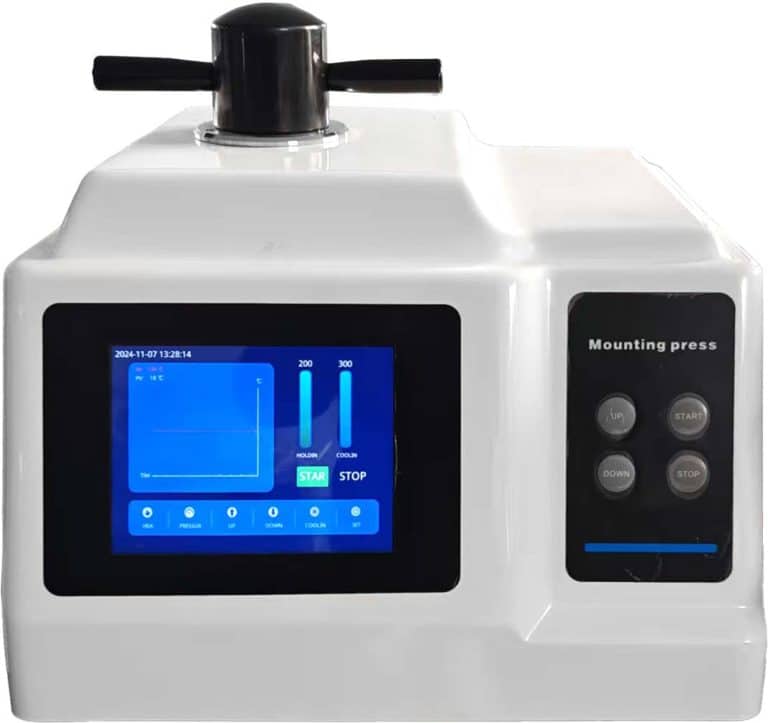
In metallographic sample preparation, hot compression mounting is an indispensable step before grinding, polishing and microscopic observation. Many lab technicians struggle with unstable specimen quality, voids and poor resin encapsulation, largely caused by incorrect pressure parameters on metallographic mounting presses. The optimal pressure setting mainly depends on your selected mounting media and target mounting quality. This blog breaks down critical pressure-related knowledge for metallographic hot mounting workflows.
Pressure Demand by Mounting Resin Type
Different thermosetting mounting resins have distinct curing temperature and pressure thresholds for ideal embedding performance.
- Phenolic resin and Epoxy resin These two widely-used hot-mount compounds normally cure within 170 °C-180 °C. The recommended working pressure is around 290 bar. This pressure level enables molten resin to fully infiltrate gaps and tightly wrap metallographic specimens, preventing gaps between specimen and resin matrix.
- Acrylic resin Acrylic mounting resin can withstand higher curing temperature up to 200 °C, so it calls for relatively higher pressure, generally above 300 bar. Higher pressure facilitates full densification of acrylic resin and improves overall mounting consistency.
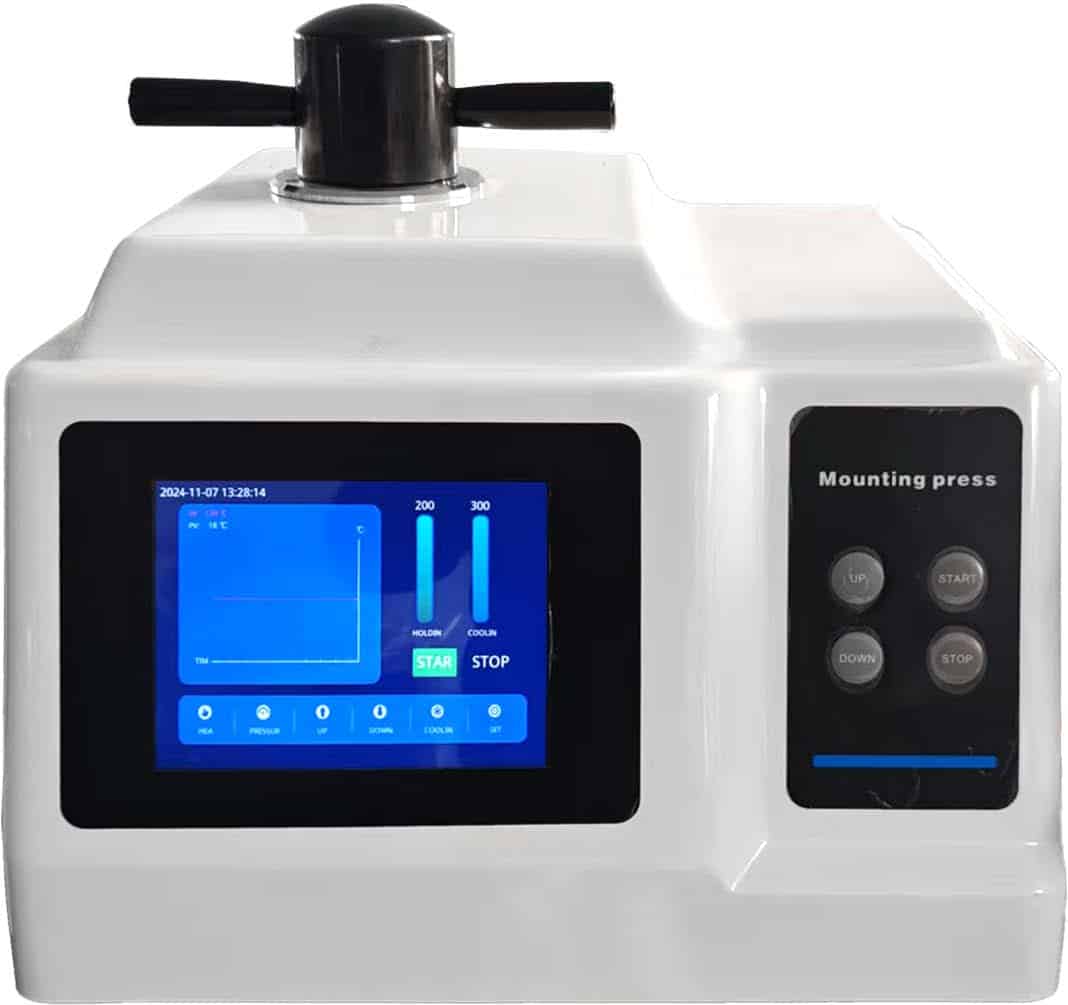
How Pressure Affects Final Metallographic Mount Quality
Appropriate pressure directly determines whether you can obtain defect-free mounts for reliable metallographic analysis. Three core effects are summarized below:
- Promote specimen densification: Sufficient pressure pushes softened resin to fill voids around the sample, improving mechanical strength and structural stability of the finished mount block. This is critical for subsequent grinding-polishing cycles.
- Minimize internal porosity and air bubbles: Proper pressure effectively expels trapped air inside molten resin, reducing bubble-related defects inside mounted specimens. Fewer voids mean fewer misleading artifacts during metallographic microscope inspection.
- Boost overall mounting yield: Correct pressure supports uniform resin wrapping around irregular-shaped specimens, avoiding common mounting flaws and delivering repeatable sample blocks for quality-control labs.
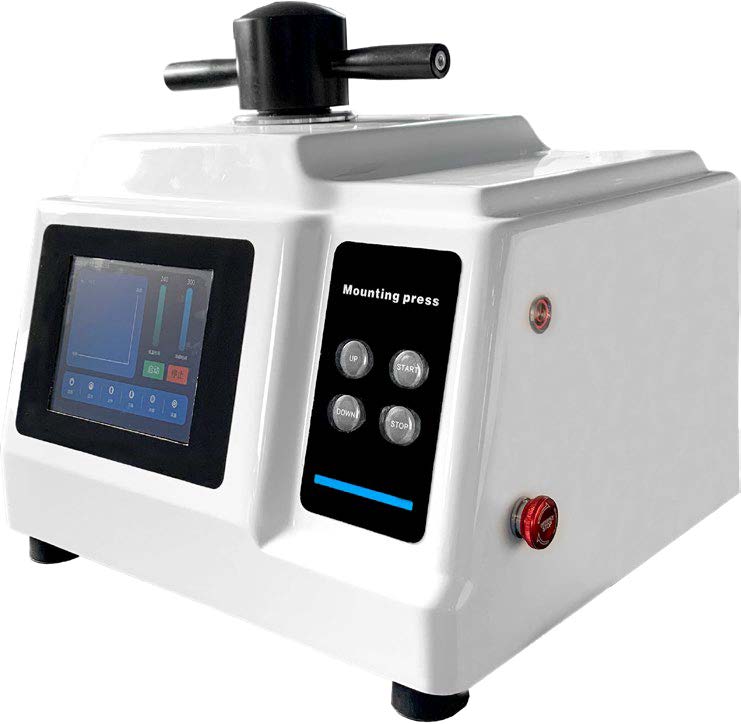

Pressure Control Mechanisms of Modern Metallographic Mounting Presses
During hot mounting, resin volume shrinks gradually while curing, which triggers spontaneous pressure drop inside the hydraulic cylinder. Advanced mounting presses adopt targeted hardware solutions to offset pressure decay:
- Pressure buffer system: Premium lab-grade mounting presses are fitted with pressure buffer modules. The system monitors real-time cylinder pressure and automatically supplements pressure to keep values within the target working range throughout the curing cycle.
- Automatic pressure control function: High-end fully-automatic metallographic mounting presses support preset pressure values according to resin grade and specimen dimension. Operators input parameters, and the machine executes closed-loop pressure control automatically without frequent manual adjustment.
Practical Operational Best Practices
To get consistent high-quality metallographic mounts, follow these practical guidelines:
- Match mounting media to your specimen: Select suitable mounting resin according to specimen material, hardness and geometry to satisfy matched temperature-pressure requirements.
- Carry out regular equipment inspection and maintenance: Periodically inspect hydraulic components, pressure sensors and sealing parts of your mounting press to guarantee accurate pressure output. Deviated pressure readings will ruin batch-prepared metallographic samples.
- Strictly follow standard operating procedures: Always comply with official SOPs for metallographic mounting press operation to protect operator safety and maintain stable equipment performance.
Conclusion
To sum up, metallographic mounting press pressure requirements are primarily governed by mounting resin categories and expected specimen quality. Unreasonable pressure settings bring porosity, insufficient densification and unreliable metallographic test results. Lab users should select compatible mounting compounds, maintain pressure-related components regularly and stick to standardized operation workflows.
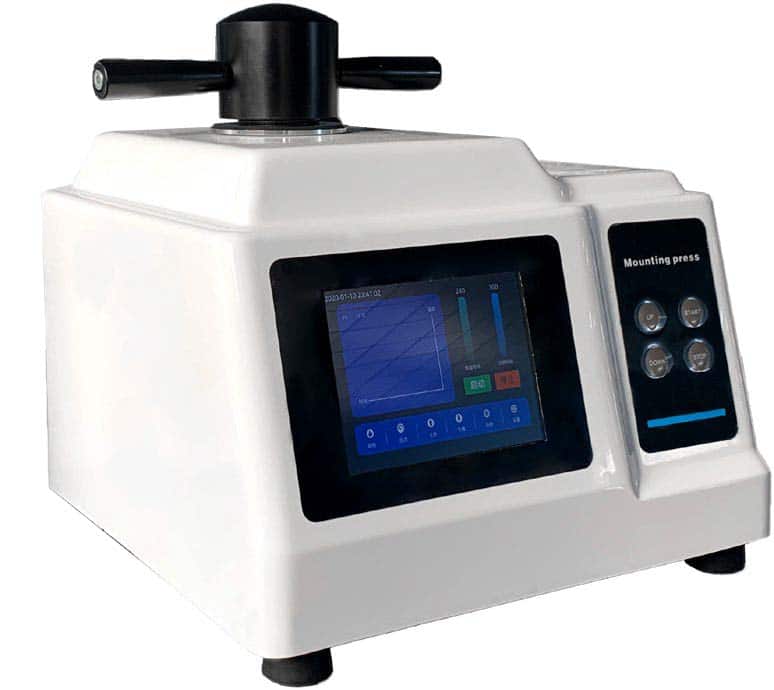
As a well-known supplier for material-testing lab instruments, Mikrosize designs its automatic metallographic mounting press series with built-in precise pressure-buffer and auto-pressure-regulation modules. Mikrosize equipment helps material-science labs, metallurgical QC departments and failure-analysis teams achieve stable, repeatable hot-mount results for diverse specimen types and resin materials.
-150x150.jpg)