-1.jpg "The UTM-SC Single Column Electronic Universal Testing Machine: Precision Mechanical Testing for Quality Assurance 1")
In the fields of quality control, materials research, and product development, the ability to accurately characterize mechanical properties is fundamental to ensuring safety, performance, and reliability. The Single Column Electronic Universal Testing Machine (UTM) , also known as a benchtop tester, is a versatile instrument designed to evaluate the tensile, compressive, bending, peeling, tearing, and shearing properties of a wide range of materials. As a compact, high-rigidity testing solution, the Mikrosize UTM-SC delivers high measurement accuracy and robust performance for laboratories and production environments alike.
Working Principle: Precision Mechanics and Digital Control
The operation of a single column electronic UTM integrates precision mechanical transmission with sophisticated digital control. The testing cycle begins when the system’s software sends a command to a digital controller, which drives a servo motor to rotate. This rotation is transmitted through a high-efficiency reduction system—typically a synchronous belt and pulley mechanism—to a precision ball screw. This assembly converts rotational motion into smooth, controlled vertical linear movement of the drive crossbeam.
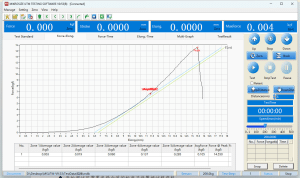
The test specimen is securely clamped between an upper fixture mounted on the moving crossbeam and a corresponding lower fixture attached to the machine’s base. As the test commences—whether in tension, compression, or bending mode—a high-precision load cell measures the applied force in real time. Simultaneously, a displacement sensor, such as a photoelectric encoder, accurately captures the specimen’s deformation or displacement. These signals are transmitted to the data acquisition system, where they are processed, analyzed, and displayed, yielding critical material parameters including tensile strength, elastic modulus, elongation at break, and yield strength.
Versatile Applications Across Industries
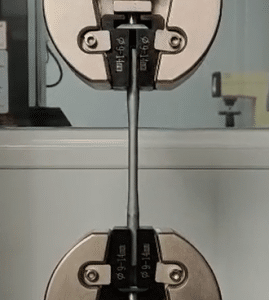
The electronic universal testing machine serves a multitude of industries due to its adaptability and comprehensive test mode functionality. Key application areas include:
Metal Materials: Testing of thin wires, foils, small fasteners, and miniature components to determine tensile strength and elongation.
Plastics and Rubber: Evaluation of tensile strength, elongation at break, compression set, and tear resistance for polymer products.
Textiles and Cables: Performing tensile and tear tests on yarns, fabrics, and electrical wires and cables.
Paper and Packaging: Assessing tensile strength, peel strength, and puncture resistance of paper, cardboard, and packaging films.
Adhesives and Composites: Measuring bond strength, peel strength, and shear properties of tapes, labels, and composite samples.
In manufacturing environments, the UTM-SC performs mechanical performance testing of components and raw materials to ensure product quality aligns with design requirements. In materials research and development, it helps researchers understand the mechanical properties of new materials and provides data support for material improvement and innovation. Scientific research institutions also rely on this instrument to study the laws of mechanical behavior of substances and promote the development of related disciplines.
Compliance with National and International Standards
To ensure the validity and global recognition of test results, the single column electronic universal testing machine is designed and manufactured in compliance with a wide range of standards. The equipment adheres to key Chinese national standards including GB/T 16491 “Electronic Universal Testing Machines,” GB/T 2611 “General Technical Requirements for Testing Machines,” and JJG 475 “Verification Regulation of Electronic Universal Testing Machines.” It also conforms to major international standards such as ASTM, DIN, ISO, JIS, and BS, making it suitable for companies engaged in international trade and quality certification.
Key Selection Considerations
-1-138x300.jpg "The UTM-SC Single Column Electronic Universal Testing Machine: Precision Mechanical Testing for Quality Assurance 5")
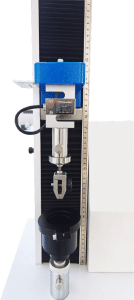
Selecting the appropriate benchtop tensile testing machine requires careful evaluation of several technical factors:
- Maximum Test Force and Sensor Range: The UTM-SC series offers capacities from 0.05kN to 10kN (5kg to 1000kg), allowing users to select a model matched to their specific testing requirements. Force accuracy is within ±1% of the indicated value, with an effective measurement range of 0.4% to 100% of full scale.
- Test Speed Range: The system supports a speed range from 0.01 to 500mm/min (with an optional maximum of 1000mm/min), accommodating diverse testing standards that specify different loading rates.
- Effective Test Space: Standard models offer a measuring height of 500mm, with heightened models available at 1000mm to accommodate larger specimens or environmental accessories.
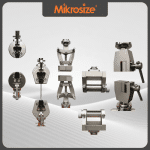
- Fixtures and Accessories: The machine supports rapid fixture loading and unloading, and can be adapted to a variety of fixtures—including tensile wedges, compression plates, bending jigs, and peel fixtures—to meet different experimental requirements.
- Software Functionality: The system provides multilingual switching (Simplified Chinese, Traditional Chinese, English, and up to 10 languages in the premium version), flexible report viewing and printing capabilities, automatic return to starting position, and multiple curve modes such as stress-strain, force-displacement, and force-time.
- Accuracy and Resolution: With a testing class of Class 1 (upgradeable to Class 0.5), displacement resolution of 0.001mm, and force value resolution of 1/300,000, the UTM-SC delivers the precision required for demanding research and quality control applications.
The Mikrosize UTM-SC single column electronic universal testing machine combines compact design, high measurement accuracy, and comprehensive test functionality to deliver reliable mechanical property data across diverse materials and applications. With its robust construction, user-friendly operation, and compliance with international standards, this instrument represents a dependable investment for laboratories, research institutions, and manufacturing facilities seeking to maintain the highest standards of quality assurance.
-150x150.jpg)