Adhesive tape manufacturers worry most about poor bonding performance of tapes; protective film producers fear easy rupture upon peeling; textile fabric enterprises are troubled by fabrics tearing under slight tension; electronic material suppliers face risks of terminal wires detaching under minor pulling forces. Behind these practical pain points lies a shared requirement: tensile, peel and tear testing under low-force conditions.
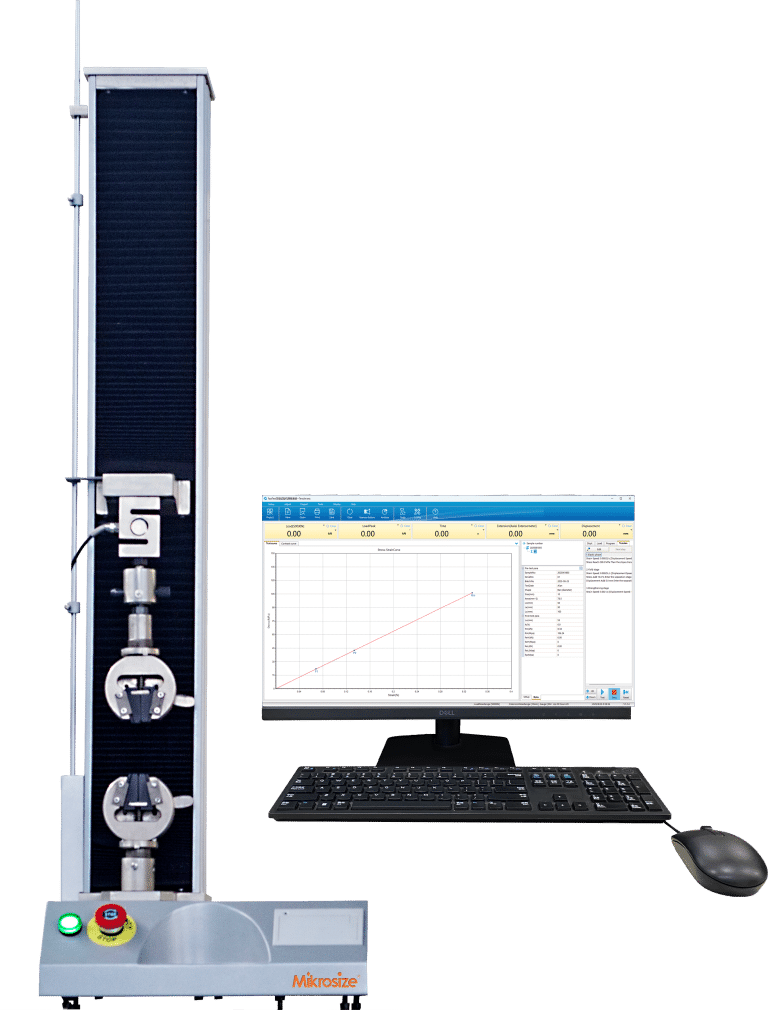
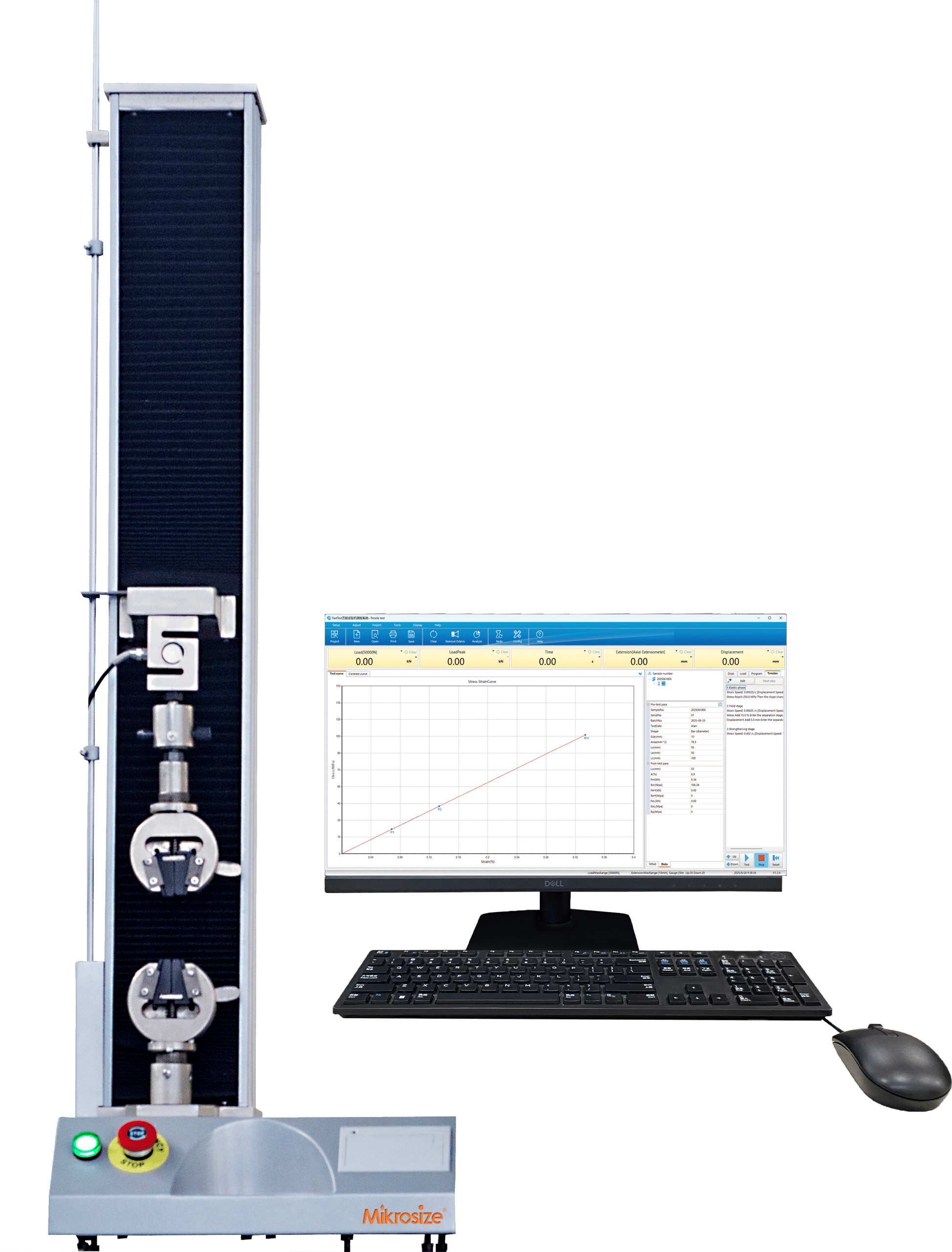
For such low-force measurement scenarios, bulky double-column universal tensile testers are often not the optimal option. Instead, single-column tensile testers, featuring a compact footprint, high measurement accuracy and user-friendly operation, serve as workhorse instruments in laboratories for thin-film, adhesive tape, textile and electronic material industries. This blog unpacks single-column tensile testers, covering their differences from double-column counterparts, core selection criteria, applicable industry sectors and compliance with standard specifications.
What Samples Can Single-Column Tensile Testers Evaluate?
Tensile testing machines fall into two primary categories by frame construction: single-column units with one supporting pillar and double-column models equipped with two vertical pillars. Such structural discrepancies directly define their respective application boundaries.
Single-column tensile testers are purpose-built for low-force testing. Typical force ranges span from tens of Newtons to several kiloNewtons (e.g., 50 N, 1 kN, 2 kN). They are well-suited for specimens that respond visibly to mild pulling loads, including thin films, adhesive tapes, non-woven fabrics, rubber-plastic sheets and electronic components. Most variants adopt a bench-top design, which can be placed directly on laboratory workbenches thanks to their lightweight build and simplified mechanical layout.
By contrast, double-column tensile testers target high-force testing and large-size specimens. Their measuring range extends from several kiloNewtons up to hundreds of tons. Boasting heavy-duty frames and superior structural stability, they are deployed for testing metallic materials, composite substances and large-scale structural components.
Far more than scaled-down versions of double-column testers, single-column systems deliver a full spectrum of mechanical property assessments for materials: tension and compression tests (to determine breaking force and elongation at break), peel tests (to assess adhesive bonding strength of tapes, removability of protective films and delamination resistance of composite membranes), as well as tear tests (for thin films, non-woven textiles and paper products). With customized fixture replacements, they can also conduct puncture measurement, bond strength evaluation, unwind force detection and pull-off force analysis.
They are specialized instruments engineered for low-load, high-precision and high-frequency test workflows.
Key Parameters to Prioritize During Equipment Selection
Although single-column tensile testers appear straightforward, several critical technical parameters deserve close scrutiny in procurement workflows.
Force Range and Load Cell Sensors
Match the tester’s measuring range to your practical test force requirements. A few hundred Newtons generally suffice for thin-film and adhesive-tape assessments; rubber sheets and lightweight composite materials may demand 1 kN-2 kN capacity. The accuracy class of load-cell sensors dictates measurement reliability. Note that over-specifying an excessively broad force range will degrade resolution within low-load intervals, generating unreliable test outcomes for delicate thin-film samples.
Measurement Accuracy and Metrological Verification
Two benchmarks must be satisfied: compliance with GB/T 16491 standard for electronic universal testing machines, and alignment with the JJG 475 metrological verification regulation, achieving 0.5-level accuracy. These prerequisites ensure generated datasets are admissible for customer audits and third-party assessment procedures.
Test Speed Range and Stroke Length
Adjustable speed parameters (e.g., 0.1-500 mm/min) determine coverage of diverse test standards. Peel assessments often call for low traverse velocities, while tensile measurements permit faster movement. Wider adjustable speed ranges deliver greater operational flexibility. Effective stroke length governs the maximum measurable specimen elongation, which carries high significance for highly-extensible rubber and thin-film samples.
Gripping Fixtures and Dedicated Software
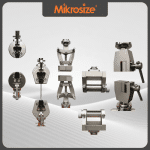
Fixtures exert huge influences on test validity. Distinct specimen categories such as thin films, wires, coil springs and adhesive tapes require dedicated clamping assemblies. Slippage or premature fracture at clamping jaws caused by mismatched fixtures will invalidate entire test batches. Meanwhile, functional software should support one-click report generation, stress-strain curve export and system data interconnection.
Bench-Top Layout and Physical Footprint
Compact footprint constitutes a major merit of single-column testers. Confirm equipment dimensions and net weight prior to purchase to guarantee compatibility with laboratory layout and ease of relocation.
Main Industry Applications of Single-Column Tensile Testers
Single-column tensile testers are widely adopted across sectors handling lightweight materials and low-magnitude mechanical loads.
- Adhesive products and packaging auxiliary materials: Test peel strength and tensile performance for pressure-sensitive tapes, double-sided adhesives, protective films, strapping bands and stretch wrap films. These devices are nearly standard laboratory equipment for tape manufacturers, die-cutting factories and packaging-material producers.
- Electronic materials and components: Measure peel force and tensile properties for FPC flexible circuit boards, protective cover films, wire harness terminals, copper foils and adhesive dielectric films. They enjoy massive deployment among consumer-electronics and new-energy component fabricators.
- Textiles and non-woven goods: Characterize breaking tensile strength and tear resistance of woven fabrics, non-woven textiles, webbing straps, hook-and-loop fasteners and medical dressings. End-users include textile mills, non-woven production plants and medical-device manufacturers.
- Rubber and plastic products: Evaluate tensile strength, elongation at break and tear performance of plastic sheets, polymer films, rubber blanks, silicone components and sealing strips. They are prevalent within plastic-product and rubber-part manufacturing sites.
- Paper-making and thin-film industries: Conduct tensile strength testing for paper substrates plus tensile-tear analysis for plastic membranes, serving paper mills and film-production enterprises.
Besides manufacturing sites, third-party testing laboratories, university research departments and quality-inspection institutions frequently deploy single-column tensile testers for routine low-force mechanical characterization.
Single-Column vs Double-Column Tensile Tester: How to Make the Right Pick
Many purchasers struggle to decide between single-column and double-column architectures. Follow this practical decision-making framework:
- Based on test force magnitude: Select single-column testers for specimens under several kiloNewtons with soft, lightweight properties. Opt for double-column solutions for metal materials, large assemblies and multi-ton force demands.
- Based on laboratory space constraints: Single-column bench-top testers are preferable for space-limited labs requiring convenient equipment relocation.
- Based on precision expectations: Within low-load domains, single-column testers frequently deliver superior resolution for delicate samples such as adhesive tapes and thin polymer films. Measurement precision hinges largely on sensor quality rather than pillar quantity.
- Based on test frequency and application purposes: Single-column testers offer cost-effective performance for routine sampling inspection and R&D comparative analysis. Double-column machines provide enhanced stability for heavy-load, high-frequency tests and oversized specimens.
Simple rule of thumb: Choose single-column units for low-force applications and space-constrained labs; select double-column systems for high-load scenarios demanding robust structural stability.
Common Pitfalls in Tensile Tester Procurement
Pitfall 1: Blind pursuit of excessive force capacity
The core competitive strength of single-column testers lies in low-force measurement. Oversized force ranges reduce resolution for tape and thin-film testing and produce distorted datasets. Proper force matching outweighs blindly large capacity.
Pitfall 2: Underestimating fixture importance
Specimens measured by single-column testers are usually thin and lightweight. Even high-grade mainframes will yield worthless results if clamps induce slippage or premature specimen fracture. Submit real-world samples to manufacturers during selection to validate customized fixture proposals.
Pitfall 3: Focusing merely on main-unit purchase price
Accuracy grade, load-cell quality, transmission assemblies, software functions and clamping fixtures collectively govern long-term data stability. Low-cost alternatives often adopt inferior sensors and drive components, resulting in measurement drift and poor repeatability.
Pitfall 4: Ignoring after-sales support and calibration services
Tensile testers generate metrological data and require periodic calibration. Confirm whether suppliers can deliver CNAS-accredited third-party calibration services and responsive technical support.
Frequently Asked Questions
Q: What is the maximum test force achievable with single-column tensile testers?
A: Commercially available single-column models cover ranges from tens of Newtons to several kiloNewtons, subject to hardware configurations. For higher-force specimen assessment, double-column testers or hydraulic testing systems are recommended.
Q: Which delivers higher precision: single-column or double-column tensile testers?
A: Precision is determined by load-cell sensors and transmission mechanisms instead of column quantity. Both architectures can reach 0.5-level accuracy within their respective rated working ranges. Single-column testers normally exhibit better resolution under low-load test conditions.
Q: Is pre-purchase sample testing feasible?
A: Yes and highly recommended. Ship representative specimens to manufacturers for free pre-sales lab testing to verify data repeatability and fixture compatibility prior to final procurement.
Conclusion
Single-column tensile testers act as diagnostic tools for low-force material characterization. They generate objective, repeatable datasets to quantify thin-film durability, adhesive tape bonding performance and fabric toughness. Despite their compact physical dimensions, they serve as daily-use core lab instruments across adhesive, electronics and textile industries.
When sourcing single-column tensile testers, avoid the misconception that “bigger equals better”. Prioritize force-range compatibility with your specimens, certified accuracy standards, dependable load-cell hardware, well-matched fixture assemblies, sufficient speed and stroke coverage, alongside reliable after-sales and calibration support. By checking these boxes, equipment from Mikrosize can maintain stable long-term performance for years of consistent material testing workflows.
-150x150.jpg)