
In material-science laboratories and industrial manufacturing sectors, advanced ceramics and optical glass are widely adopted thanks to their outstanding physical and chemical properties. How to achieve damage-free sectioning for metallographic observation has become a common technical challenge for lab technicians and material researchers. A frequently-searched practical question is: is a standard metallographic cutting machine suitable for cutting hard-brittle specimens like ceramics and glass? This blog will break down core obstacles and actionable operational tips for metallographic cutting of brittle non-metallic materials.
- Core Challenges of Cutting Brittle Specimens: Mechanism Conflict Between Equipment and Material Properties
A metallographic cutting machine completes specimen separation mainly through the grinding force generated by high-speed rotating abrasive cutting wheels. Nevertheless, ceramics and glass belong to typical hard-brittle materials, featuring high hardness yet extremely low fracture toughness. When cutting force loads act on these samples, internal stress concentration easily occurs inside the workpiece. Once stress exceeds material fracture threshold, micro-cracks will rapidly propagate, finally resulting in chipping, cracking or complete sample fragmentation. This inherent conflict between cutting principle and brittle-material characteristics forms the primary barrier for metallographic sectioning of ceramic and glass samples. Many operators encounter ruined test pieces simply because they use metal-cutting parameters directly for brittle samples.
- Adjust Cutting Rotational Speed: Convert Sharp Impact Into Uniform Grinding Force
When dealing with brittle-material metallographic cutting, spindle speed adjustment is one of the most decisive operational factors. Although higher rotational speed improves cutting efficiency for metallic specimens, excessive spinning speed delivers huge instantaneous impact force to fragile glass and ceramic workpieces, greatly raising cracking risks.
You need to reduce the spindle RPM appropriately for brittle sample sectioning. Lower-speed operation distributes grinding force more evenly across the cutting zone, effectively mitigating local stress concentration and suppressing crack expansion. For users searching for best cutting speed for ceramics on metallographic cutter, remember: prioritize sample integrity over cutting throughput; slow-speed wet cutting brings far better outcomes than aggressive high-speed dry cutting for fragile non-metallic specimens.
- Careful Selection of Cutting Wheels: Optimize Abrasive Grit Size and Bond Agent Performance
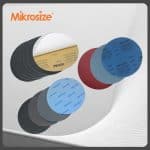
Choosing the proper metallographic cutting wheel for ceramic and glass heavily governs final cut quality. Two critical specifications need close attention: abrasive grain size and bond agent property.
If the abrasive grit is too coarse, deep subsurface damage and edge chipping will appear on finished sample surfaces. Over-fine grit, conversely, will drastically drop cutting efficiency and cause wheel glazing. Select cutting discs with moderate abrasive grain size to strike balance between surface integrity and processing speed.
Besides grit size, high-quality bond agent guarantees stable geometric shape of cutting wheels during continuous operation, maintaining cutting dimensional precision. For sectioning hard brittle non-metallic samples, diamond-infused cutting wheels with stable resin or metal bond are highly recommended, instead of ordinary alumina abrasive wheels for steel samples. Improper wheel selection ranks top among reasons for ceramic sample chipping during metallographic cutting.


- Utilize the Cooling System: Control Thermal Stress to Prevent Thermal-Induced Cracks
Intense friction during metallographic sectioning generates massive localized heat at the cutting gap. Brittle ceramics and glass are extremely sensitive to uneven temperature distribution. Sharp thermal stress caused by partial overheating can initiate invisible internal micro-cracks, which may not show up immediately after cutting yet ruin subsequent microscopic analysis results.
Make full use of the circulating water cooling system built into metallographic cutting equipment. Keep sufficient coolant continuously flushing the cutting contact area to take away frictional heat, reduce thermal-stress accumulation and stabilize material physical status. For metallographic preparation of heat-sensitive brittle specimens, never run dry-cut operations even for quick test cuts.
- Rigid Sample Clamping: Stable Fixture Setup Avoids Vibration-Triggered Breakage
Even with perfect speed, wheel and cooling settings, poor sample fixation can still destroy your ceramic or glass metallographic specimens. Any tiny shaking, shifting or vibration of workpieces during cutting introduces extra impact load, triggering edge breakout or full-piece fracture, meanwhile hurting cutting accuracy.
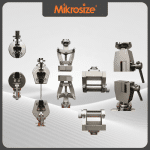
Always employ matched fixtures, soft protective gaskets and clamping jigs to fasten brittle samples solidly before starting cutting. Ensure zero sample movement throughout the whole sectioning cycle. If you are looking for how to hold fragile glass samples on metallographic cutter, adding elastic buffer padding between clamps and samples effectively absorbs vibration and lessens clamping-point crushing damage.
Conclusion
To sum up, metallographic cutting machines can cut ceramics and glass successfully, but you cannot copy parameter settings for metal specimens directly. Successful low-damage sectioning of brittle samples depends on multiple coordinated measures: lowering spindle rotation speed, selecting suitable diamond cutting wheels with matched grit and bond, activating sufficient circulating coolant to release thermal stress, and applying reliable anti-vibration fixture clamping. Ignoring any one of these variables may lead to micro-cracks, chipping or total sample failure.
If you are sourcing reliable lab-grade equipment for metallographic sample preparation of hard brittle materials, Mikrosize delivers comprehensive metallographic cutting solutions tailored for ceramics, glass and other non-metallic brittle specimens. Mikrosize’s cutting equipment supports adjustable spindle speed, high-flow circulating cooling and diversified fixture accessories, helping material-research labs obtain crack-free, high-quality cross-section samples and improve your overall metallography workflow efficiency.