Selection Guide for Polishing Cloths (Velvet & 6 Other Types) and Suspensions by Sample Material
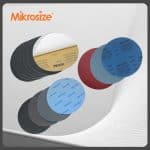
The core of material polishing lies in the precise matching of polishing cloth hardness, nap characteristics with suspension particle size and abrasive type. It aims to efficiently remove surface grinding marks while avoiding sample surface damage, edge rounding, or internal microstructure deformation. This document focuses on 7 core polishing cloth materials (Velvet, Flocked, Canvas, Silk, Woolen, Nylon, Synthetic Polymer), summarizes full-process (rough, intermediate, fine polishing) selection schemes by sample material category, covering mainstream samples such as metals, ceramics, polymers, and semiconductors, balancing practicality and operability.
- Core Property Analysis of 7 Polishing Cloth Materials
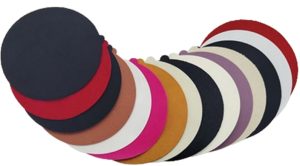
Clarify the core properties of the 7 polishing cloths first to lay a foundation for selection and avoid deviations caused by material confusion:
- Velvet:Long-pile silk material, soft with short-pile texture (actually long-pile), fine surface, gentle cutting force, low-stress soft cloth, not easy to scratch soft samples. Suitable for high-precision materials like stainless steel and soft materials such as aluminum, copper, magnesium. Compatible with diamond suspension, particle size 0.5~5μm, for intermediate and fine polishing.
- Flocked:Short-pile cotton material, uniform short nap, flat nap surface, medium hardness, moderate cutting force, good cleanliness. Suitable for stainless steel, electronic circuit boards, and soft metals. Compatible with diamond suspension, particle size 1~3μm, for intermediate polishing and partial fine polishing of soft materials.
- Canvas:Non-nap cotton material, non-nap, high density, wear-resistant, good air permeability, high hardness, strong cutting force. Core choice for rough polishing, mainly for rough polishing of stainless steel. Compatible with diamond suspension, particle size 5~14μm, for removing deep grinding marks.
- Silk:Non-nap material, fine, soft and tough, gentle and uniform cutting force, no particle residue. Suitable for graphite or inclusions. Compatible with diamond suspension, particle size 0.5~3.5μm, for high-precision fine polishing.
- Woolen:Thickened navy fabric, pressed wool product, soft, slightly long nap, good air permeability, low stress, reduces sample deformation. Mainly for steel materials. Compatible with diamond suspension, particle size 3~5μm, for fine polishing of soft metals and polymers.
- Nylon:Chemical fiber product, high density, medium-hard hardness, wear-resistant, tear-resistant, stable cutting force. Mainly for rough polishing of steel materials. Compatible with diamond suspension, particle size 7~20μm, for rough and intermediate polishing, high versatility.
- Synthetic Polymer:Non-nap, porous structure, compatible with diamond, aluminum oxide, silicon dioxide suspensions (particle size 0.02~1μm). Controllable material (adjustable hardness), flat surface, wear-resistant, low residue. Suitable for final fine polishing of various materials (especially for synchronous chemical-mechanical polishing), especially for titanium, copper, silver and other non-ferrous metals, glass, silicon and other ultra-soft materials. For intermediate and fine polishing, ideal for precision samples.
- Core Principles for Polishing Cloth and Suspension Selection
2.1 Polishing Cloth Selection Logic (Based on 7 Materials)
- Hardness Matching: Hard samples (cemented carbide, ceramics) prefer Canvas, Nylon (hard, high cutting force); soft samples (aluminum, copper, polymer) prefer Velvet, Woolen, Silk (soft, low-stress); medium-hard samples (stainless steel, titanium alloy) can choose Flocked, Synthetic Polymer (medium hardness, high adaptability).
- Stage Matching: Rough polishing (remove deep scratches) → Canvas, Nylon (hard, high cutting); Intermediate polishing (transition scratch removal) → Flocked, Nylon (medium cutting, flat); Fine polishing (mirror effect) → Velvet, Silk, Woolen, Synthetic Polymer (soft, low residue).
- Sample Property Matching: Porous/brittle samples (cast iron, ceramics) choose Canvas, Nylon (air permeable, not easy to clog pores); deformable/soft-phase samples (aluminum, polymer) choose Velvet, Woolen (low-stress, anti-deformation); high-precision samples (semiconductors, precision metals) choose Silk, Synthetic Polymer (residue-free, high flatness).
2.2 Suspension Selection Logic
- Particle Size Gradient: Strictly follow “rough → intermediate → fine” to reduce particle size step by step, avoid cross-level causing deep scratch residue: Rough polishing (6–15μm) → Intermediate polishing (1–6μm) → Fine polishing (0.02–0.5μm).
- Abrasive Type: Diamond, boron carbide for hard samples (steel, cemented carbide, ceramics); Aluminum oxide (Al₂O₃) for general metals; Silicon dioxide (SiO₂) for soft metals, semiconductors, glass; Corrosion inhibitor can be added to non-ferrous metals (copper, magnesium) to prevent oxidation.
- Chemical Compatibility: Neutral/weakly alkaline suspension for oxidizable samples; Temperature control for polymer samples to prevent softening, use low-viscosity, cooling suspension; Ultra-pure suspension for semiconductor samples to avoid impurity contamination.
-150x150.jpg)