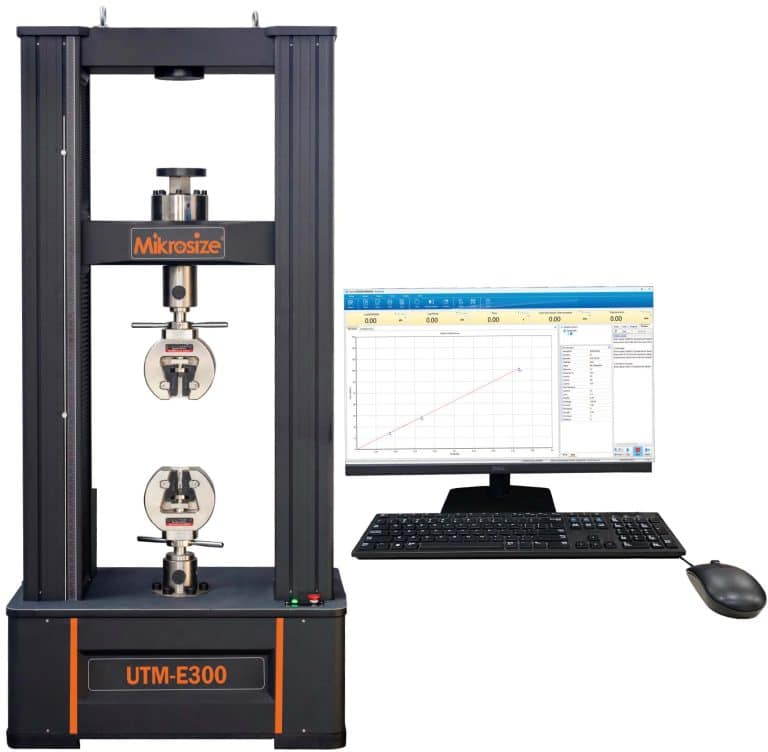
In today’s rapidly evolving industrial landscape, material testing has become an indispensable process across numerous sectors, ranging from aerospace and automotive to construction and consumer goods. The microcomputer-controlled electronic universal testing machine stands as a benchmark of precision and versatility within this industry, delivering comprehensive mechanical property analysis for a wide variety of materials. As a reliable supplier in the precision measurement sector, Mikrosize takes a leading position in providing high-end testing equipment via its Measurement & Testing Instruments Division, offering state-of-the-art technologies that satisfy the stringent requirements of modern quality control and scientific research.
Equipment Purpose & Scope of Application
The electronic universal testing machine series boasts unmatched functional performance and wide application coverage. It can conduct a full range of mechanical tests, including tension, compression, bending, shear, peeling, tearing, extraction and ring stiffness measurement. This versatile testing device serves as core equipment for evaluating metallic and non-metallic materials, covering metal wires, foils, plates, rods, plastic pipes, plastic profiles, waterproof coiled materials, geotextiles, wires and cables, textiles, fibers, rubber, ceramics, concrete, adhesives, food & pharmaceutical packaging, films, wood and paper products.
Such testers are widely adopted by mechanical manufacturing, automobile production, aerospace, petrochemical, wire and cable, papermaking, textile, construction and building material industries. They are also essential for quality supervision & inspection authorities, professional research institutes and educational institutions for R&D and academic teaching. Thanks to strong adaptability, these machines are vital equipment for enterprises and labs that demand accurate material characterization and performance verification.
Technical Parameters & Performance Features
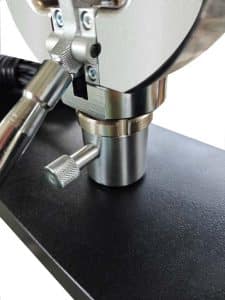
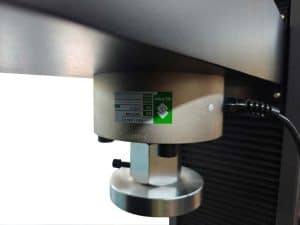
Modern electronic universal testing machines are equipped with cutting-edge configurations to guarantee outstanding accuracy and stability. They adopt a fully digital closed-loop servo control system driven by AC servo motors to actuate high-precision ball screw pairs, enabling precise movement control of the crossbeam. This advanced mechanical structure is matched with high-precision load cells to capture real-time force signals. Meanwhile, photoelectric encoders measure displacement, and deformation measuring devices (e.g., electronic extensometers) track specimen deformation throughout testing.
All models feature high-precision technical indicators: force measurement accuracy reaches ±0.5% of the indicated force value, displacement resolution can be as fine as 0.001 mm, and adjustable test speed ranges from 0.005 to 500 mm/min. Premium models deliver even higher-precision parameters, with a displacement resolution of 0.0005 mm and a speed scope of 0.001 to 1000 mm/min. Such ultra-high precision ensures acquired data can truly reflect material mechanical responses under various stress states.
Structural Design & Mechanical Structure
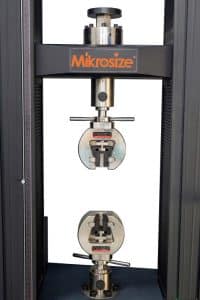
Structural rigidity is the core guarantee of stable testing performance for universal testing machines. Most mainstream models adopt a portal frame structure composed of two vertical columns and two precision ball screws fixed between the upper crossbeam and worktable. The AC servo motor and driver drive zero-backlash precision ball screws synchronously via timing belts, which pushes the movable crossbeam up and down stably and smoothly.
This structural design brings multiple strengths: high integral rigidity, stable loading output and long-term operational reliability. The robust frame effectively reduces vibration noise and interference to improve measurement repeatability. Combined with anti-interference wiring layout, the high-strength frame extends equipment service life and lowers daily maintenance costs.
Compliance with International Standards
Microcomputer-controlled electronic universal testing machines comply with a complete set of national and international standards, making test results globally recognized and accepted for cross-border trade and joint research. The applicable standards include:
- GB/T 16491-2008 Electronic Universal Testing Machine
- GB/T 16825.1-2008 Verification of static uniaxial testing machines
- GB/T 228.1-2010 Metallic materials — Tensile testing at ambient temperature
- GB/T 232-2010 Bending test methods for metallic materials
- ASTM E8 Standard Test Methods for Tension Testing of Metallic Materials
- ISO 527 Plastics — Determination of tensile properties
Advanced Control & Data Management
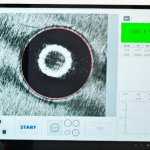
Computerized control systems represent the core upgrade of modern testing equipment. Units are fitted with touchscreen intelligent control interfaces that display real-time test parameters and real-time test curves. The supporting software allows presetting test parameters, automatic batch testing and multi-language interface switching to meet diverse operating demands.
Data acquisition performance has also been greatly upgraded; the sampling rate of some models reaches 200 Hz to record full-cycle material property changes during testing. The equipment reserves multiple data interfaces including RS232, USB and Ethernet, allowing seamless data export to external storage and network access. Rich data management functions are supported, such as SQL database storage and docking with third-party professional software for in-depth data analysis and automatic report generation.
Mikrosize: Your Trusted Measurement Partner
As an established enterprise specializing in precision measurement instruments, Mikrosize has built solid credibility in supplying premium testing equipment through its Measurement & Testing Instruments Division. The brand adheres to technical innovation and full-cycle customer service, providing clients with superior products and comprehensive technical support throughout the full equipment life cycle. Mikrosize’s profound expertise in material testing solutions makes it the ideal partner for institutions looking to upgrade testing capacity with accurate and stable universal testing machines.
Customized Configurations for Diverse Testing Scenarios
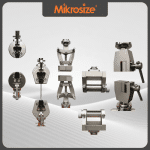
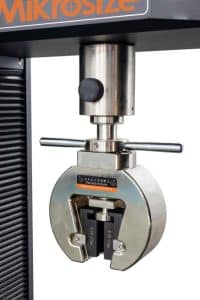
Rich optional accessories and customized fixtures further expand the application capacity of microcomputer-controlled electronic universal testing machines. Users can install dedicated tooling as required, such as wedge tensile fixtures, V-type compression fixtures, bending jigs and shear fixtures to satisfy targeted test standards. In addition, environmental auxiliary devices including high-temperature furnaces, low-temperature chambers and constant temperature & humidity cabinets enable testing under controlled conditions to simulate actual service conditions of materials.
This modular design greatly expands the application scope of the main tester. A single core device can complete tests under multiple working conditions without purchasing multiple dedicated testing instruments. Fast switching between different fixture configurations makes these machines highly suitable for labs with diversified testing demands or multi-material R&D projects.
Future Development & Industry Trends
The iteration of electronic universal testing machines keeps pace with mainstream industrial technologies, featuring higher automation level, better equipment connectivity and data fusion capability. Future R&D directions will focus on strengthening AI predictive functions: algorithms will predict material mechanical properties from historical test datasets, while optimized human-machine interfaces simplify operation and deliver more powerful analytical tools.
The industry has growing demand for multi-functional integrated testing platforms to save workshop space and improve testing efficiency. Meanwhile, cloud-based data management solutions facilitate remote equipment monitoring and cross-regional collaborative data analysis, further raising the practical value of such testing equipment in global manufacturing chains.
Conclusion
The microcomputer-controlled electronic universal testing machine is an integrated high-precision solution for comprehensive material performance evaluation, integrating precision mechanical design and digital closed-loop control technology. With wide application coverage, full compliance with global standards and flexible modular configurations, it acts as critical quality assurance and R&D equipment across all manufacturing sectors. Supported by its Measurement & Testing Instruments Division, Mikrosize continuously delivers such advanced testing solutions with professional technical after-sales service, helping customers obtain accurate and reliable material test data matching their unique production and research demands. As material science advances continuously, these versatile integrated testing platforms will remain indispensable instruments for verifying material performance and boosting technological innovation in manufacturing and material research industries.

-150x150.jpg)