-768x858.jpg "Key Advantages of Automatic Spectrum Sample Grinding Machines 1")
For metallurgical quality-control labs and foundry workshops, how to get consistent spectrum sample surfaces is a persistent pain point. Manual sample grinding heavily depends on operator skill and often delivers inconsistent finishes that distort spectrometer readings. An automatic spectrum grinding machine solves these bottlenecks and brings measurable improvements for high-volume metal composition testing.
1. High-Level Automation Boosts Sample-Preparation Throughput
These units support one-touch startup and continuous batch processing. Operators can pre-configure critical parameters including grinding duration, grinding-wheel spindle speed, and applied grinding pressure, eliminating constant manual supervision.
Single-sample processing cycles run from 30 seconds to 2 minutes, vastly faster than 5-10 minutes required for manual grinding. This performance fits perfectly for ladle-side rapid testing in steel foundries and high-throughput batch-sample analysis workflows. It shortens overall testing turnaround and helps production teams maintain stable manufacturing rhythms. Select premium models add automatic loading-unloading modules to enable near-unattended operation and further cut manual labor costs.
2. Stable Grinding Quality Guarantees Spectrometer Testing Accuracy
Manual grinding suffers from human variables: varying applied force, inconsistent hand angles, and operator experience gaps. These factors create uneven surface roughness, residual scratches, or leftover oxide layers, which directly corrupt elemental analysis outputs from optical emission spectrometers.
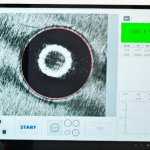
By precise programmable process control, automatic spectrum grinders lock in uniform grinding depth, flatness, and surface finish for every specimen. Human-introduced errors are greatly reduced, which lifts repeatability and accuracy of spectral instrument data. Finished parts come burr-free, impurity-free and oxide-film-free. The spectrometer excitation source makes full contact with fresh metal surfaces, avoiding false spectral lines and unstable data fluctuations.
.jpg "Key Advantages of Automatic Spectrum Sample Grinding Machines 2")
Real-World Application Scenario: Ladle-Side Quality Control at a Medium-Sized Iron Foundry
A mid-scale casting plant produces cast iron and carbon-steel ingots, performing OES ladle-side checks before molten metal pouring. Previously technicians ground sample cups by hand. Shift-to-shift operator differences caused scattered spectral readings, occasionally triggering misjudgments of molten-steel alloy ratios. After deploying an automatic spectrum abrasive grinding machine, each cast sample gets standardized surface treatment within 90 seconds. Test-result repeatability improves dramatically; false alarms drop significantly, and fewer defective heats go into production. This is a widely-seen real-world deployment across global metal foundry quality labs.
3. Enhanced Operational Safety, Reduced Labor Burden & Hazards
Manual grinding creates flying metal chips, wheel-fragment risks that may cause operator cuts, plus inhalable metallic dust that threatens long-term respiratory health. Holding samples for extended periods also brings severe hand fatigue for lab staff.
Automatic spectrum grinding machines adopt fully-enclosed protective housings paired with integrated dust-collection systems. The hardware effectively blocks flying debris and captures grinding-generated metallic dust, safeguarding staff and improving factory-floor working conditions. Operators complete only three simple steps: place sample → launch saved program → retrieve finished specimen. Physical workload drops substantially, making these devices ideal for high-frequency testing stations.
.jpg "Key Advantages of Automatic Spectrum Sample Grinding Machines 3")
.jpg "Key Advantages of Automatic Spectrum Sample Grinding Machines 4")
4. Standardized Processing Compatible With Multiple Spectrometers & Alloy Materials
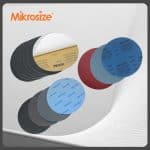
Users can store dedicated grinding-and-prep recipes for diverse materials: cast iron, carbon steel, stainless steel, aluminum alloy, copper alloy and more. Operators flexibly swap abrasive wheel types such as aluminum-oxide grinding wheels and silicon-carbide grinding wheels, and tune process parameters accordingly.
Prepared surfaces satisfy sample-surface specifications for optical emission spectrometers (OES), handheld XRF analyzers, and laser spectrometers. Uniform specimen surface states prevent spectrometer calibration drift driven by sample-surface inconsistency, improving data comparability across test batches and different analytical instruments.
5. Eco-Friendly & Clean Workflow Compliant With Industrial-Site Standards
Built-in high-efficiency dust-extraction systems capture more than 95 % of metallic grinding dust, stopping dust dispersion across production zones. Less floating particulate also protects expensive nearby precision spectrometers and extends instrument service life.
Full-enclosed mechanical structures suppress operational noise versus loud manual bench grinders. Lower running noise meets occupational-health-and-safety requirements for modern industrial workshops.
.jpg "Key Advantages of Automatic Spectrum Sample Grinding Machines 5")
.jpg "Key Advantages of Automatic Spectrum Sample Grinding Machines 6")
Frequently Asked Questions (QA)
Q1: Can automatic spectrum grinding machines process non-ferrous metal samples like aluminum and copper alloys?
A1: Yes. You can save material-specific programs and fit matched abrasive grinding wheels. Adjust spindle speed and grinding pressure for soft non-ferrous metals to avoid surface smearing and achieve qualified spectroscopic surfaces.
Q2: Do I still need manual polishing after automatic spectrum grinding for OES testing?
A2: For most routine optical-emission-spectroscopy ladle-control work, grinder-finished surfaces meet test requirements without extra polishing. Extra polishing may be required only for ultra-high-precision research-grade material analysis.
Q3: What are the main consumable parts for automatic spectrum grinders?
A3: Primary wear items include abrasive grinding wheels, dust-filter cartridges, and sealing gaskets. Following recommended maintenance cycles preserves surface-prep consistency and extends machine service life.
Q4: Will dust-collection efficiency drop when running continuous high-volume batches?
A4: Filter cartridges need regular inspection and replacement. If filters clog, dust-capture performance declines. Scheduled filter maintenance maintains the machine’s environmental-protection performance for long-run batch processing.
.jpg "Key Advantages of Automatic Spectrum Sample Grinding Machines 7")
Conclusion
Automatic spectrum sample grinding machines deliver clear advantages over manual workflows: higher throughput, human-error-free consistent sample surfaces, improved operator safety, multi-material adaptability, and eco-friendly dust-management performance. For foundries, steel mills, and material-quality-control laboratories, standardized automated sample preparation is the foundational step toward trustworthy spectrometer data. When selecting spectroscopic-sample-prep hardware, it is critical to balance processing speed, surface-reproducibility, dust-extraction performance, and material compatibility. Mikrosize, a professional supplier of metallurgical and spectroscopic sample-preparation instruments, develops robust grinding-related equipment and application recipes for industrial QC labs. Their solutions help labs minimize preparation-caused deviations and deliver stable, repeatable specimen surfaces for OES, XRF and other metal-composition-analysis workflows.
-150x150.jpg)