-1-768x1034.png "Complete Guide To Common Pitfalls Of Portable XRF Analyzer For On-Site Metal Testing | Mikrosize 1")
Many customers frequently ask: “Why do test results from my sample differ so much from lab data?” “Is there something wrong with my portable XRF analyzer?”
In most cases, inaccurate readings are not caused by instrument hardware failure, but improper operation. Even though a portable XRF analyzer features simple operation, accurate measurement still requires proper know-how. This article covers 10 widespread pitfalls during on-site metal testing with portable XRF analyzer, check how many you have encountered.
Pitfall 1: Accurate results can be obtained simply by pressing the trigger
Many operators treat the portable XRF analyzer as a “one-click foolproof device”. They believe you only need to aim at the sample and pull the trigger. In fact, testing posture, contact angle and surface cleanliness all heavily affect result accuracy.
Correct Practices
- The test window must fit tightly against the sample surface with zero gaps
- Keep the analyzer perpendicular to sample surface; avoid tilting
- Hold the instrument steady without shaking until measurement finishes
- Ensure small samples fully cover the test window to prevent light leakage
The iSpectro-F5000 Portable XRF Spectrum Analyzer weighs only 1.46 kg with battery. Its ergonomic design helps operators maintain stable holding status during testing to reduce shaking-related error.
Pitfall 2: Shorter testing time means better performance
“3-second results” is a common marketing slogan for portable XRF analyzer. However, 3-second output is only for preliminary screening, which can merely identify general alloy categories. Precise composition analysis requires longer testing duration.
General reference for testing duration:
- 2-3 seconds: Rapid sorting, preliminary alloy grade judgment
- 10-15 seconds: Precise composition test for regular alloys
- 30-60 seconds: Low-level trace elements, precious metals and other special-scenario testing
Keep in mind: Precision is proportional to the square of testing time. To double your testing precision, you need four times the testing duration. 15-second acquisition is recommended for daily testing; for critical components and high-value materials, 30+ seconds are suggested. Equipped with high-power X-ray tube, iSpectro-F5000 Portable XRF Spectrum Analyzer delivers stable signal output for extended-time trace-element measurement.
-1-223x300.png "Complete Guide To Common Pitfalls Of Portable XRF Analyzer For On-Site Metal Testing | Mikrosize 2")
-1-169x300.jpg "Complete Guide To Common Pitfalls Of Portable XRF Analyzer For On-Site Metal Testing | Mikrosize 3")
-1-106x300.jpg "Complete Guide To Common Pitfalls Of Portable XRF Analyzer For On-Site Metal Testing | Mikrosize 4")
Pitfall 3: Accurate measurement is achievable with paint, oil or oxide layers on sample surface
X-ray fluorescence has limited penetration capability. If the sample surface is covered by paint, oil, oxide or rust, the reading reflects the surface contaminants instead of the true composition of base material.
Correct Practices
- Grind off surface coating and oxide layers with sandpaper before testing
- Wipe away oil and dust thoroughly
- Make sure the testing surface is flat, clean and shows metallic luster
Many operators skip grinding to save time, yet this shortcut may lead to highly misleading data. Especially for metal recycling scenarios, samples with paint or rust will generate readings of barely any reference value if tested directly. The non-destructive feature of iSpectro-F5000 Portable XRF Spectrum Analyzer works only for clean bare-metal surfaces. Surface pre-treatment remains necessary for contaminated samples.
Pitfall 4: The analyzer can detect all elements including carbon, sulfur and phosphorus
A frequently raised question: “Can a portable XRF analyzer measure carbon?” The answer is no.
A standard portable XRF analyzer covers elements ranging from magnesium (Mg) to uranium (U). Due to physical principle constraints, light elements including carbon (C), nitrogen (N) and oxygen (O) cannot be detected.
For precise measurement of carbon, sulfur and phosphorus, optical emission spectrometer (OES) is required. Mikrosize delivers the iSpectro-F5000 Portable XRF Spectrum Analyzer for field-based X-ray fluorescence analysis covering over 30 standard elements ranging from Mg to Pu, and can also support customers with matched OES-based testing solutions to satisfy diversified testing requirements.
Pitfall 5: Tiny samples are hard to test while large samples always work well
Many users assume larger samples guarantee easier measurement, which is not always true.
Tiny samples such as metal wires below 1 mm diameter cannot fully cover the test window. X-ray leakage will occur and drive down test results. The iSpectro-F5000 Portable XRF Spectrum Analyzer supports 0.5 mm non-contact detection to measure weld seams and miniature components.
Large-size samples also have potential issues. For example, bulky castings with uneven surfaces cannot form full contact with the test window and hurt accuracy. Note that X-ray penetration depth is only dozens to hundreds of micrometres. As long as sample thickness exceeds this threshold, further thickening brings no extra benefit for testing.
Pitfall 6: Temperature has no influence on test results
Some users believe temperature does not affect portable XRF analyzer performance. Temperature can indeed interfere with readings, though not in the way many imagine.
- Ambient temperature: Within instrument rated working range, temperature imposes limited impact. The iSpectro-F5000 Portable XRF Spectrum Analyzer adopts SDD detector cooled to -35 °C with resolution ≤135 eV for stable spectrum collection.
- Sample temperature: Room-temperature samples work fine; newly hot-processed workpieces require special operational caution.
- Detector cooling: SDD detector relies on active cooling to sustain measurement stability.
Pitfall 7: Portable XRF produces heavy radiation that harms human health
This is the most-concerned and widely misunderstood point.
To clarify: portable XRF analyzers belong to Category-III radiation devices with the lowest radiation dose level. There is zero radiation when powered off or on standby; X-ray beams are emitted only when the trigger is pulled. X-ray is directional and shoots solely out of the test window without omni-directional scattering. Under proper operation, yearly radiation exposure for operators is roughly equivalent to one medical X-ray scan, well below national safety limits.
Safety Operation Tips
- Never point the test window toward human bodies during measurement
- Use fixtures for small samples; do not hold samples by hand while testing
- Never disassemble or modify the instrument
- You may wear personal dosimeters to track cumulative radiation dose for extra safety awareness.
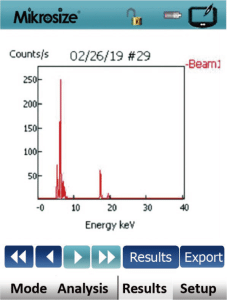
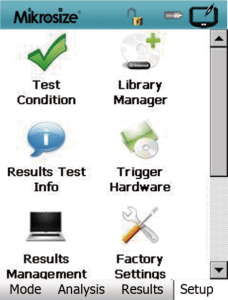
Pitfall 8: Higher-priced analyzers can measure more elements
When selecting a portable XRF analyzer, suitability outweighs price. Key dimensions for evaluation:
- What materials do you test most frequently? → defines required testing modes
- What level of precision do you require? → defines detector and X-ray tube configuration
- What is your working environment? → defines durability and protection requirement
- Is local after-sales service accessible? → determines long-term usage experience
Mikrosize recommends iSpectro-F5000 Portable XRF Spectrum Analyzer according to actual on-site testing requirements instead of simply pushing high-price models. Its adjustable 35KV/50KV X-ray tube with optional filters adapts for various sample matrices.
Pitfall 9: Frequent instrument calibration is required
Many users compare portable XRF analyzer with lab balances and believe frequent calibration is necessary. This is incorrect.
iSpectro-F5000 Portable XRF Spectrum Analyzer uses fundamental-parameter (FP) method with full calibration completed at factory. Without heavy physical shock or detector damage, calibration every 1-2 years is sufficient. Some competing instruments require frequent standard-sample calibration, which usually compensates for weak algorithms and poor hardware stability.
Pitfall 10: Low battery power will cause inaccurate test data
Some operators worry low battery reduces X-ray tube power and distorts measurement results. This concern is unfounded for qualified portable XRF analyzer.
Quality instruments come with built-in voltage-stabilizing circuits. As long as the device can power on, excitation-source output remains stable. Low battery only shortens working time and will not damage measurement accuracy.
iSpectro-F5000 Portable XRF Spectrum Analyzer runs Windows CE system, equipped with high-capacity memory and multiple data transmission methods. Imported lamp source achieves service life over 2000 hours for more than 720 000 test cycles. Its industrial TFT touchscreen supports simple one-touch operation to minimize human error.
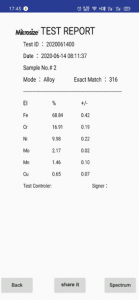
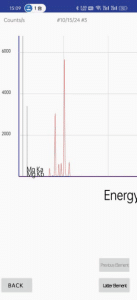
Use your tool properly to boost work efficiency
The portable XRF analyzer is a powerful testing tool. Yet even high-quality hardware can only deliver reliable performance with correct operation. Understanding these common pitfalls helps technicians avoid mistakes, obtain trustworthy data and operate instruments with greater confidence.
Conclusion
Many discrepancies between field readings and laboratory reference data stem from human-operational mistakes rather than equipment defects. As Mikrosize emphasizes, surface preparation, correct testing posture, reasonable acquisition duration, basic radiation-safety awareness and proper understanding of instrument capabilities are all critical prerequisites for credible on-site metal testing. No portable XRF device, including the iSpectro-F5000 Portable XRF Spectrum Analyzer, can produce accurate outputs if basic operating rules are ignored. Master these best practices, and you can fully unlock the performance of your analyzer and reduce erroneous judgments in daily inspection, material sorting and recycling workflows.
-150x150.jpg)