-1-768x913.jpg "How to Choose Stereo Microscope Stands? 1")
Many customers only focus on core components such as lens magnification and trinocular imaging when purchasing stereo microscopes, yet overlook the critical role of Stereo Microscope stands, vertical columns and boom arms. The stand determines the entire microscope’s operating space, sample compatibility, equipment stability and supporting lighting performance. A poorly matched stand can lead to a host of problems: insufficient space to place samples, blind observation zones, inability to implement transmitted lighting, and blurry imaging caused by lens shaking.
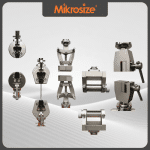
This article covers four widely used industrial stands: B1 Vertical Column Flat Base, B2 Vertical Column Transmitted & Reflected Integrated Base, B3 Boom Arm Large Flat Base, and B9 Boom Arm Sloped Flat Base. We break down the hardware specifications, structural design, advantages and limitations of each model one by one, paired with real-world application scenarios to help you select the ideal microscope stand for your production, laboratory or repair workflows in one go.
1. Detailed Introduction to the Four Base Models
1) B1 Vertical Column Flat Base
- Standard Configuration
Stage equipped with specimen clips and interchangeable Φ95mm black-and-white working plate; vertical column height: 240mm, column diameter: Φ32mm; overall base dimension: 200×255×22mm.
- Structure & Features
Adopts a minimalist straight vertical column paired with a compact small flat base, with no built-in light source. The unit is ultra-light and slim. The dual black-and-white working plates can be swapped instantly to enhance edge contrast of workpieces. The standard Φ32mm column is highly universal, compatible with most ring lights, coaxial lights, binocular and trinocular microscope heads. It is lightweight and easy to transport, allowing multiple units to be arranged side-by-side without occupying excessive bench space.
-1-222x300.jpg "How to Choose Stereo Microscope Stands? 2")
- Advantages & Limitations
Pros: Cost-effective, simple to assemble and disassemble, the black-and-white stage is ready for immediate out-of-box use, ideal for basic visual inspection. Cons: Limited stage area cannot accommodate large workpieces; no integrated transmitted light source for direct observation of transparent thin slices; fixed vertical column restricts vertical travel, making it unsuitable for extra-thick tall specimens.
2) B2 Vertical Column Transmitted & Reflected Integrated Base
- Standard Configuration
Comes with specimen clips, interchangeable Φ95mm glass stage plate and black-and-white working plate; integrated dimmable transmitted light source (12V/15W halogen lamp with adjustable brightness; 7W fluorescent lamp optional); vertical column specifications identical to B1 (240mm height / Φ32mm diameter); reinforced base thickness up to 40mm. - Structure & Features
Built upon the B1 standard column design with an integrated bottom transmitted lighting module, enabling dual-path observation via top reflected light + bottom transmitted light. The glass stage is dedicated to transparent thin specimen inspection, while swapping to the black-and-white plate switches the unit to general solid-part inspection, delivering dual functionality in one base. The thicker reinforced base delivers improved stability for heavy trinocular heads and high-resolution industrial cameras, and it can directly replace the B1 base with zero modification costs.
-1-252x300.jpg "How to Choose Stereo Microscope Stands? 3")
- Advantages & Limitations
Pros: Integrated transmitted light eliminates the need for an external bottom light source, delivering crisp imaging for transparent samples; high column compatibility for simple equipment upgrades.
Cons: Thicker profile occupies slightly more bench space than B1; halogen lamps generate mild heat during prolonged continuous operation; medium-sized stage cannot accommodate large circuit boards or bulky molds.
3) B3 Boom Arm Large Flat Base
- Standard Configuration
Extra-wide solid flat base measuring 380×260×20mm; extended 300mm vertical column with movable boom arm; focusing travel: 100mm; universal lens mounting bore Φ76mm compatible with all standard stereo microscope heads; stage supplied without specimen clips or black-and-white plates.
Structure & Features
- Combines a heavy-duty large flat base with an extendable boom arm for maximum stability and ample operating space. The 300mm tall column paired with 100mm focusing travel handles thick workpieces with extreme height differences. The boom arm slides vertically and extends horizontally, allowing the lens to hover outside the base perimeter for unobstructed viewing. The expansive unobstructed flat stage supports full-size panels, large housing casings and molds, with unrestricted horizontal sliding for wide-area scanning inspection.
-1-283x300.jpg "How to Choose Stereo Microscope Stands? 4")
- Advantages & Limitations
Pros: Exceptional stability, generous working space and flexible boom movement; suitable for both large flat panels and thick 3D workpieces with deep cavities; no lens shake under high magnification.
Cons: No integrated transmitted light or black-and-white contrast plates; large footprint creates crowding issues on compact workbenches.
4) B9 Boom Arm Sloped Flat Base
- Standard Configuration
Sloped compact base dimension: 205×275×25mm; stage fitted with specimen clips and interchangeable Φ95mm black-and-white working plate; 300mm vertical column with movable boom arm; focusing travel: 100mm; universal Φ76mm mounting bore for microscope heads.
- Structure & Features
Features a space-saving sloped compact base paired with a flexible extendable boom arm, striking a perfect balance between footprint and operational freedom. The extendable boom enables clear observation of side profiles, chamfers and internal cavities. The built-in black-and-white working plate streamlines contrast inspection for small components. Its moderate overall size conserves bench space, making it equally suited for precision inspection and electronic repair workflows.
- Advantages & Limitations
Pros: Flexible boom design, space-efficient footprint, integrated black-and-white contrast stage; optimized for 3D components, device teardown repair and small-to-medium cavity inspection.
Cons: Stage size rules out oversized molds or full-size circuit boards.
2. Recommended Application Scenarios & Industries
Scenario 1: Small Component Visual Inspection / Academic Teaching / Basic Gemstone Evaluation
- Recommended Model: B1 Vertical Column Flat Base Applicable Industries: Micro electronic component sorting, small hardware piece inspection, university & K-12 laboratory teaching, retail gemstone preliminary screening.
- Primary Use Cases: Inspecting pin burrs and surface scratches, observing insect & seed specimens, preliminary grading of loose gemstones and other fundamental visual inspection tasks.
Scenario 2: PCB / Biological Slide / Transparent Film / Optical Glass Inspection
- Recommended Model: B2 Vertical Column Transmitted & Reflected Integrated Base Applicable Industries: Printed circuit board manufacturing, biological research labs, optical film & lens production, transparent plastic molding quality control Primary Use Cases: Identifying inner circuit traces, micro-vias, tissue structures on slides and light-transmitting defects, all requiring bottom transmitted backlighting.
Scenario 3: Large Mold / Full-Size PCB / Large Housing / Heavy-Duty Cavity Inspection
- Recommended Model: B3 Boom Arm Large Flat Base Applicable Industries: Injection mold manufacturing, new energy circuit board production, large household appliance casing processing, heavy hardware deep cavity quality control Primary Use Cases: Full placement of large casings and panels, wide-area surface scanning, high-magnification observation of deep cavities and thick workpieces.
Scenario 4: 3C Housing / Laptop & Smartphone Repair / Small-to-Medium Deep Cavity Hardware Inspection
- Recommended Model: B9 Boom Arm Sloped Flat Base Applicable Industries: Consumer electronics casing machining, mobile device repair shops, small automotive valve & precision hardware component manufacturing.
- Primary Use Cases: Side profile, chamfer and internal cavity defect inspection, ample unobstructed space for soldering and component disassembly during repair work.
3. Summary
If your daily workflow mainly consists of basic visual inspection of small flat components, the compact, versatile and cost-effective B1 is your top choice. For analyzing light-transmitting samples including PCBs, biological slides and transparent films, the B2 with factory-integrated transmitted light source eliminates extra lighting purchases and simplifies your workflow. For regular inspection of oversized workpieces such as industrial molds and full-size circuit boards alongside thick cavity components, the B3 with its large flat base and boom arm delivers superior stability and expanded operating range. For digital device repair and small-to-medium 3D component machining that demands flexible boom movement alongside contrast inspection of tiny parts, the moderately sized B9 sloped base offers well-rounded balanced performance. Selecting a matching stand unlocks the full optical performance of your stereo microscope, significantly boosting your overall inspection and production efficiency.
-150x150.jpg)