Precision Color Measurement: Essential Guide to Spectrophotometers & Colorimeters
In industries where color consistency defines quality—paints, plastics, textiles, automotive, packaging, and pharmaceuticals—reliable color measurement is non‑negotiable. Advanced optical instruments, spectrophotometers and colorimeters, provide the objective data needed for rigorous quality control. Mikrosize, a trusted supplier of precision Measuring and Testing Instruments (including hardness testers), offers this guide to help you choose the right color measurement technology.
Core Technology: Digitally Emulating Human Vision
Spectrophotometers and colorimeters quantify color by simulating the human eye’s response to red, green, and blue light, using standardised CIE colour spaces—primarily L*a*b* and LCH*.
A spectrophotometer illuminates a sample with a stable light source. The reflected (or transmitted) light is separated into its constituent wavelengths by a diffraction grating. Sensor arrays measure intensity across the visible spectrum, generating a unique spectral reflectance/transmittance curve—the colour’s “fingerprint.” This data yields tristimulus values (X, Y, Z), converted into L*a*b* or LCH* values. The Mikrosize iColor‑T407 employs planar grating spectrometry and a silicon photodiode array (40 pairs) for optical resolution <10 nm, covering 360–780 nm—including UV for materials with optical brighteners.
A colorimeter simplifies this using broadband filters to approximate standard observer functions, directly outputting tristimulus values and colour difference (∆E*) without spectral data.
Key Components & Measurement Geometries
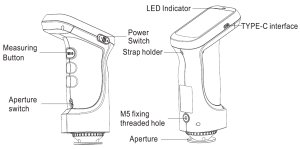
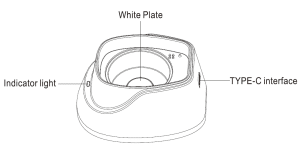
Performance depends on components and optical geometry:
- Light source: Combined full‑spectrum LED with UV control, lifespan >1.5 million measurements in 10 years.
- Integrating sphere: Φ40 mm sphere providing diffuse illumination (d/8° geometry) and minimising surface texture effects.
- Geometry: D/8° (diffuse illumination, 8° viewing) complies with CIE No.15, GB/T 3978, ISO 7724‑1, and ASTM E1164.
- Dual modes: SCI (includes gloss) and SCE (excludes gloss) for comprehensive colour assessment.
Spectrophotometer vs. Colorimeter: Choosing the Right Tool
Spectrophotometer – The Analytical Powerhouse
Full spectral curve for metamerism assessment, colour formulation, and raw material QC.
Superior precision, repeatability, and diagnostic detail.
Ideal for R&D, pigment development, coatings, plastics compounding, and colour matching.
Outputs L*a*b*, LCH, ∆E, spectral curves, plus indices (whiteness, yellowness).
Colorimeter – The Efficient Inspector
Measures ∆E for pass/fail decisions only; no spectral data.
Suitable for basic comparison, high‑speed production checks, and batch verification.
Lower cost but lacks diagnostic power.
While spectrophotometers require a higher initial investment, their versatility reduces waste and rejects, delivering long‑term value—a principle Mikrosize upholds.
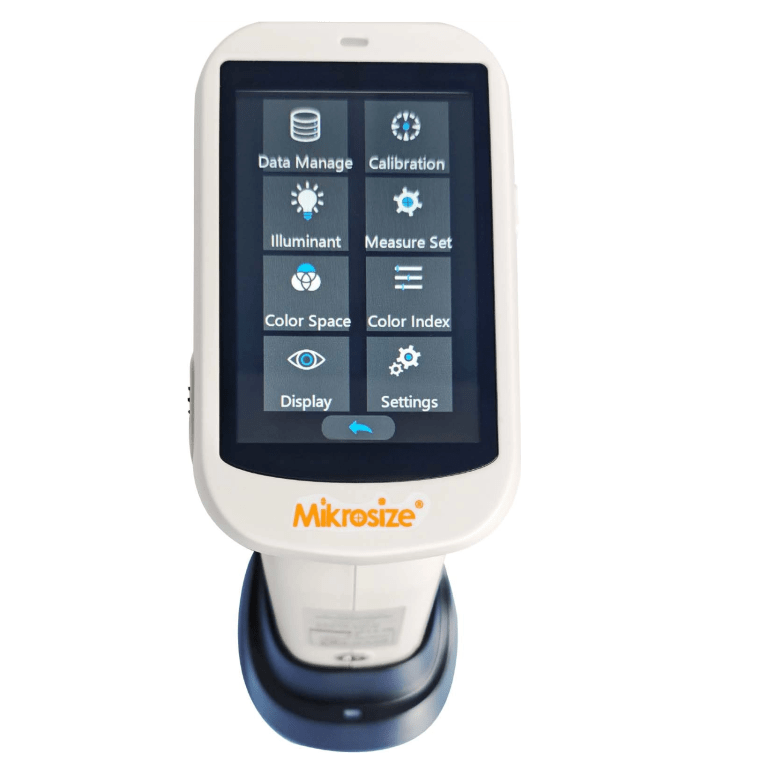
The Mikrosize iColor‑T407 Portable Spectrophotometer
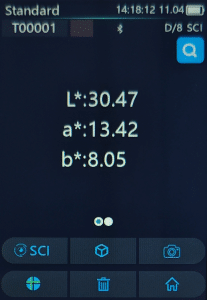
Engineered for portability and lab‑grade accuracy, the iColor‑T407 offers:
- Multi‑aperture switching: 8 mm, 4 mm, and 1×3 mm (platform/tip) for various sample sizes.
- Large storage: 500 standards + 20,000 samples, expandable via APP/PC.
- Dual connectivity: USB and Bluetooth for seamless data management.
- 41 selectable illuminants (D65, A, TL84, etc.) and 2°/10° observer angles.
- Multiple colour spaces: CIE Lab, XYZ, Yxy, LCh, LUV, s‑RGB, HunterLab, Munsell.
- Colour difference formulas: ∆Eab, ∆E00, ∆E94, ∆Ecmc, DIN∆E99.
- Repeatability: ∆E*ab ≤0.02; spectral reflectance SD ≤0.07% (400–700 nm).
- Inter‑instrument agreement: ∆E*ab ≤0.2 (MAV/SCI).
- Battery: 5000 mAh – 8,500 measurements in 8 hours.
- Display: 3.5″ TFT capacitive touchscreen, multi‑language.
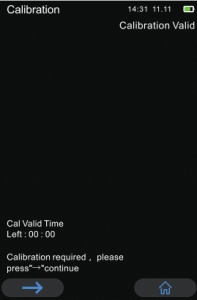
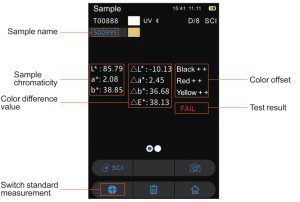
Advanced features include camera framing positioning, non‑contact auto‑whiteboard calibration, average measurement (2–99 times), real‑time USB/Bluetooth printing, and switchable UV for fluorescent samples.
Industrial Applications
- Plastics & electronics: Batch‑to‑batch consistency.
- Paints & inks: Precise formulation and correction.
- Textiles & printing: Accurate colour assessment.
- Ceramics: Predict fired colours, reduce waste.
- Raw material acceptance: Check pigments, resins, fabrics.
- Process control: Monitor colour during extrusion, coating.
- Final inspection: Certify against ∆E tolerances.
- Digital communication: Share spectral data globally, eliminating subjective visual evaluation.
-150x150.jpg)