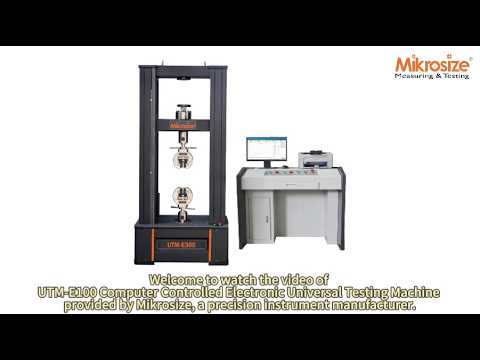
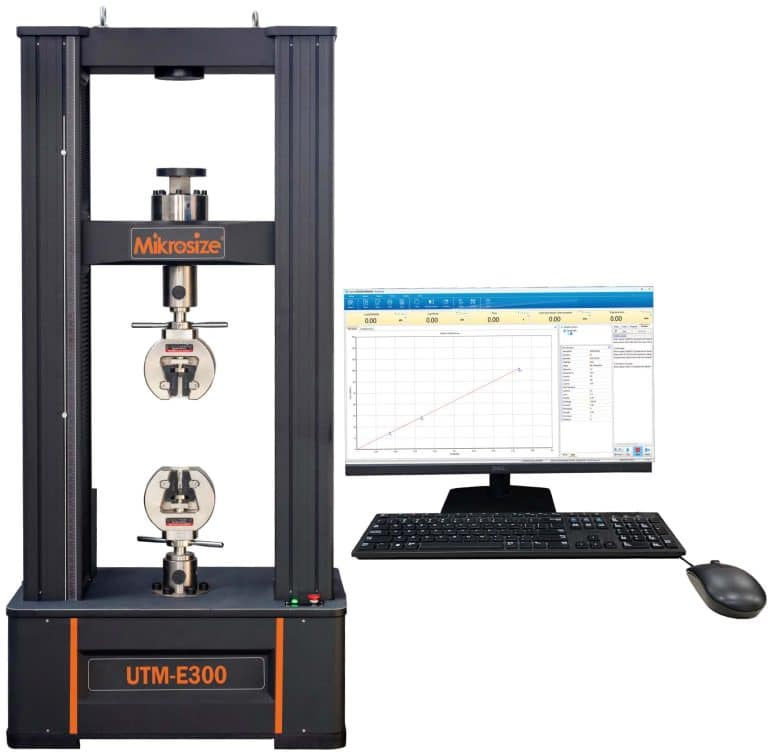
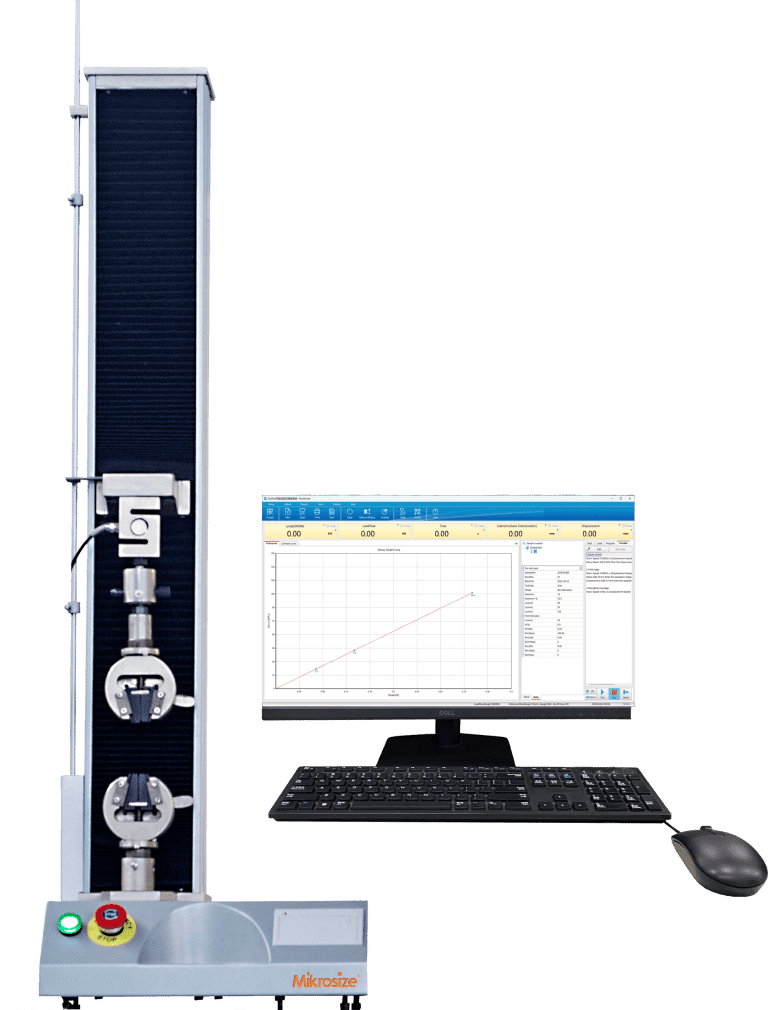
A mechanical testing machine is a precision testing instrument used to determine the mechanical properties of materials and components under various loading conditions, including tension, compression, bending, shear, impact, insertion and extraction, and spring force[cite: 14]. Parameters such as strength, toughness, stiffness, and elasticity are key indicators for evaluating product reliability and safety[cite: 14].
Mechanical testing machines are primarily used for incoming material inspection, quality control during production, finished product inspection before delivery, product failure analysis, and R&D verification[cite: 14]. They are widely used in industries such as machinery manufacturing, automotive, electronics, aerospace, metal materials, plastics, and rubber[cite: 14].
Depending on the equipment type and testing principle, these machines can perform various mechanical property tests on metallic and non-metallic materials, including tensile strength, yield strength, elongation, impact toughness, connector insertion and extraction force, and spring stiffness[cite: 14]. Benchtop and floor-standing models meet the requirements for high-precision laboratory measurements and rapid testing on production lines[cite: 14].
Typical Application Industries:
- Machining, mold manufacturing, and metal materials industries[cite: 14]
- Automotive components, aerospace parts, and rail transit testing[cite: 14]
- Electronic connectors, plug-in connectors, wire harnesses, and charging gun industries[cite: 14]
- Spring manufacturing, hardware products, and fastener production lines[cite: 14]
- Quality inspection laboratories, third-party testing organizations, and university research institutions[cite: 14]
- Manufacturers of plastics, rubber, composite materials, and elastomers[cite: 14]
Different types of equipment support different testing modes and standards: universal testing machines can perform tensile, compression, bending, and peel tests; pendulum impact testing machines measure the impact energy absorbed by materials; insertion and extraction force testers are specifically designed to measure the insertion and withdrawal forces of connectors; and spring tension and compression testing machines are used to test spring stiffness and load-deformation characteristics[cite: 14].
Mikrosize mechanical testing machines are specialized equipment for testing the mechanical properties of materials and components in the field of industrial quality inspection[cite: 14]. The entire product range is manufactured in strict accordance with internationally recognized testing standards and meets the mechanical testing requirements of various industries[cite: 14]. These machines are equipped with high-precision force sensors, closed-loop servo control systems, and professional testing software[cite: 14]. Through precise and controllable loading, they acquire force, displacement, and deformation data, and automatically calculate key parameters such as strength, modulus, and toughness[cite: 14]. High-end models support fully automated testing, multi-channel data acquisition, real-time curve display, and one-click report generation, meeting the stringent requirements of industrial and scientific research testing applications[cite: 14].
Different mechanical testing technologies have distinct technical characteristics and application scenarios, enabling them to address testing challenges under different operating conditions[cite: 14]. Universal testing machines use servo motors and closed-loop control to provide stable loading and high accuracy[cite: 14]. They are suitable for conventional mechanical property tests, including tension, compression, and bending, on metals, plastics, rubber, and composite materials, making them essential equipment for laboratories and quality inspection centers[cite: 14]. Pendulum impact testing machines convert the potential energy of a pendulum into impact kinetic energy to determine the impact toughness of materials under dynamic loading[cite: 14]. They are widely used to evaluate the toughness of steel, cast iron, and engineering plastics[cite: 14]. Insertion and extraction force testers are specifically designed for connectors, terminals, and charging interfaces[cite: 14]. They can accurately measure insertion force, withdrawal force, and retention force, and support cycle life testing[cite: 14]. Spring tension and compression testing machines are designed to test various types of springs, including extension springs, compression springs, and disc springs, in terms of load-deformation characteristics and stiffness, ensuring consistent performance of spring products[cite: 14].
The entire range of Mikrosize mechanical testing machines features highly rigid machine structures and simplified operating procedures, significantly improving operational efficiency in industrial production, quality control, equipment maintenance, and laboratory testing[cite: 14]. With its comprehensive product line, Mikrosize provides mechanical testing solutions for all types of materials, ranging from low-capacity spring testing to high-capacity hydraulic universal testing[cite: 14]. The equipment supports flexible switching among mainstream units such as N, kN, kgf, and lbf[cite: 14]. Intelligent digital display models are equipped with high-definition touchscreens or computer software, enabling real-time visualization of test data[cite: 14]. Most models feature built-in data storage and USB/Ethernet interfaces, supporting one-click data export and archiving, as well as in-depth analysis on computers, making it convenient for enterprises to establish standardized quality inspection data systems[cite: 14].