Confused about choosing between Rockwell, Brinell and Vickers hardness testers? This guide compares all types, applicable workpieces and common selection mistakes for heat treatment & lab QC.
During daily quality inspection in machinery manufacturing, mold processing and material laboratories, hardness testing is one of the most fundamental and critical testing procedures. Most procurement staff, QC inspectors and lab technicians face the same confusing question: what are the differences between Rockwell, Brinell and Vickers hardness testers, and which model fits my workpieces perfectly?
This article sorts out their core advantages, applicable scenarios and limitations in plain language, helping you avoid costly selection errors once and for all.
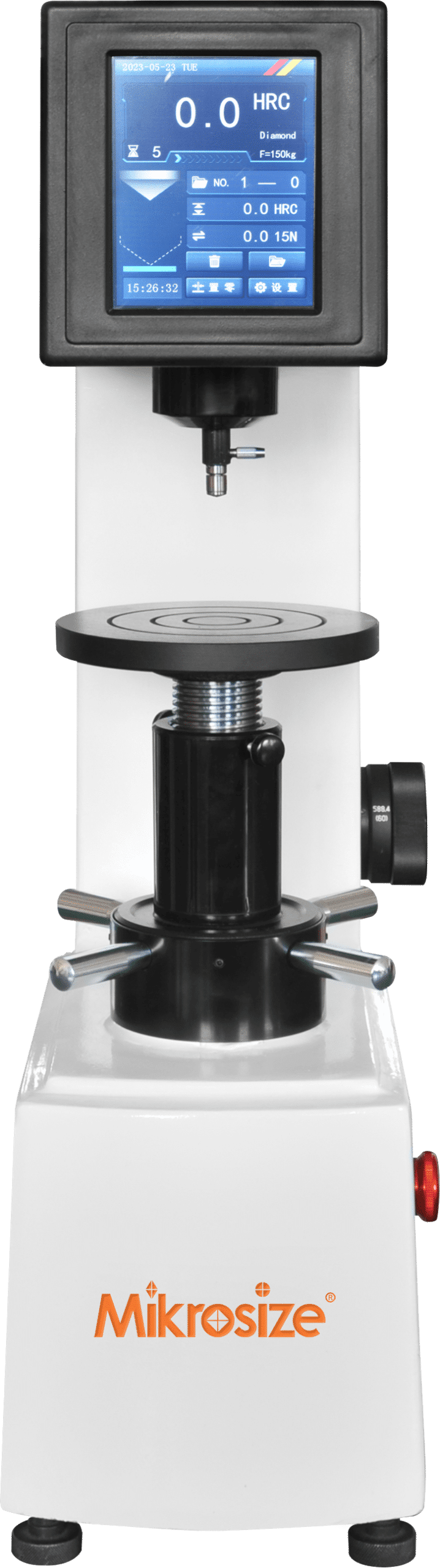
1. Rockwell Hardness Tester: Ideal For Mass Batch On-Site QC
As the most widely used industrial hardness tester on production lines, Rockwell units stand out for high efficiency.
Core Advantages
- Ultra-fast testing speed, perfectly matching mass production workflow
- Intuitive direct readings with stable repeatability
- Tiny indentation that barely damages workpiece surfaces
Applicable Workpieces
Mold steel, quenched parts, shafts, gears and standard hardware components; hardness inspection before & after heat treatment; routine batch QC on assembly lines.
Unsuitable Objects
Ultra-soft materials, ultra-thin sheets and miniature tiny components
Summary
Rockwell hardness testers are the top pick for factory daily batch inspection.
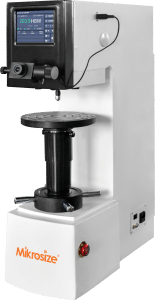
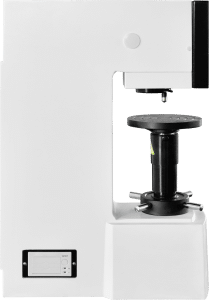
2. Brinell Hardness Tester: Best For Soft Materials & Castings
Brinell testing creates the largest indentation and delivers the most uniform data for uneven grain structures.
Core Advantages
- Consistent, stable test results for coarse-grain alloys
- Balanced indentation for heterogeneous raw materials
Applicable Workpieces
Cast iron, cast steel, aluminum alloy and copper alloy; annealed & normalized soft raw materials; incoming material inspection of metal blanks.
Unsuitable Objects
High-hardness quenched workpieces, finished parts with strict surface appearance requirements
Summary
Choose a Brinell hardness measuring instrument if you test castings or soft metal raw materials.
3. Vickers Hardness Tester: Precision Equipment For Thin Layers & Micro Samples
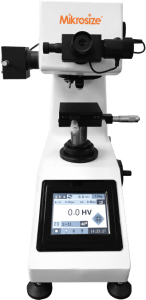
Vickers testers are lab-grade precision digital hardness testers with the widest testing range and highest accuracy.
Core Advantages
- Supports ultra-thin sheets, micro pins and miniature parts
- Accurately measures carburized, nitrided and electroplated surface coatings
- Covers the full hardness spectrum from soft to super-hard materials
Applicable Workpieces
Thin metal strips, tiny precision pins; surface hardness detection of heat treatment penetration layers; scientific research and high-precision laboratory testing.
Unsuitable Objects
Large-volume continuous mass production (slow single test cycle)
Summary
Vickers models are mandatory for coating testing and micro precision inspection.

4. Quick Selection Cheat Sheet
|
Workpiece Feature |
Recommended Hardness Tester |
|
Hard, thick, mass-produced parts |
Rockwell |
|
Soft raw materials, castings & blanks |
Brinell |
|
Thin sheets, micro parts & surface plating layers |
Vickers |
5. 3 Common Mistakes When Picking A Hardness Tester
Many purchasing errors arise from mismatching tester type with workpiece properties:
- Testing hard quenched parts with Brinell units → Indentation fails to form, inaccurate fluctuating data
- Testing soft aluminum/copper with Rockwell testers → Overlarge indentation distorts final readings
- Using standard Rockwell/Brinell machines for thin coated parts → Indentation penetrates coating, invalid test data
6. Final Conclusion
There is no universal “best” portable hardness tester or desktop hardness unit; only the most matched model for your actual workpieces. Matching the correct tester type greatly boosts inspection efficiency and eliminates misjudgment caused by improper hardness testing.
FAQ
Q1: Which hardness tester for heat treatment suits gear batch inspection?
Rockwell hardness testers are the optimal choice for large batches of gears after quenching and tempering. Its small indentation and fast measurement greatly improve production line efficiency.
Q2: Can Vickers testers replace Brinell machines for casting incoming inspection?
Vickers units have much slower testing speed, so they are not cost-effective for mass casting raw material inspection. Brinell hardness measuring instrument delivers more stable average data for coarse cast grain structures.
Q3: What type of hardness tester is recommended for thin electroplated parts?
Vickers hardness testers are the only viable option. Its tiny indenter can measure plating layer hardness without penetrating the base metal substrate.
Q4: Why do I get unstable readings when testing soft aluminum alloy with Rockwell equipment?
Rockwell indentation depth is too deep for soft non-ferrous metals, causing large data fluctuations. Switch to a Brinell industrial hardness tester for more consistent results.
Q5: Are desktop Rockwell testers suitable for on-site pipeline and mold spot checks?
For field mobile inspection, choose a portable Rockwell hardness meter instead of bulky desktop models. Fixed desktop units are designed for lab stationary QC only.
Q6: Can Brinell hardness testers test fully hardened high-speed steel?
No. Brinell indenters cannot press into ultra-hard quenched steel, which will lead to invalid readings. Rockwell or Vickers hardness testing machine is required for high-hardness alloy workpieces.
Q7: Which tester works best for micro precision pins used in electronic components?
Vickers micro hardness testers are specially made for miniature components. It supports ultra-small test points that ordinary Rockwell and Brinell devices cannot achieve.
Q8: What’s the biggest downside of Vickers hardness testers on mass production lines?
Vickers testing takes far longer per sample, which cannot keep up with high-volume assembly line speed. It is mainly used for sampling inspection and lab research rather than full batch testing.
-150x150.jpg)