Introduction to Hardness Testing
Hardness is one of the core mechanical property indexes of materials, as it directly reflects a material’s resistance to indentation, scratch damage and permanent plastic deformation under external load. Hardness testing thus serves as an indispensable method for evaluating the quality of metal materials, machined parts, and even some structural components. Specifically, hardness refers to the inherent ability of a material to resist residual deformation when pressed by another harder object — the stronger this resistance, the higher the material’s hardness. The Brinell hardness test, in particular, is widely adopted for reliable hardness measurement of materials such as cast iron, carbon steel, alloy steel, non-ferrous metals (such as copper and aluminum alloys), and soft alloys. Beyond metals, it also finds application in testing certain rigid non-metallic materials, such as hard plastics, bakelite, and some composite materials. This versatility makes it suitable for a wide range of industrial and laboratory scenarios, including production plants, machining workshops, quality inspection laboratories, university teaching labs, and scientific research institutions.
The Digital Brinell Hardness Tester: An Overview
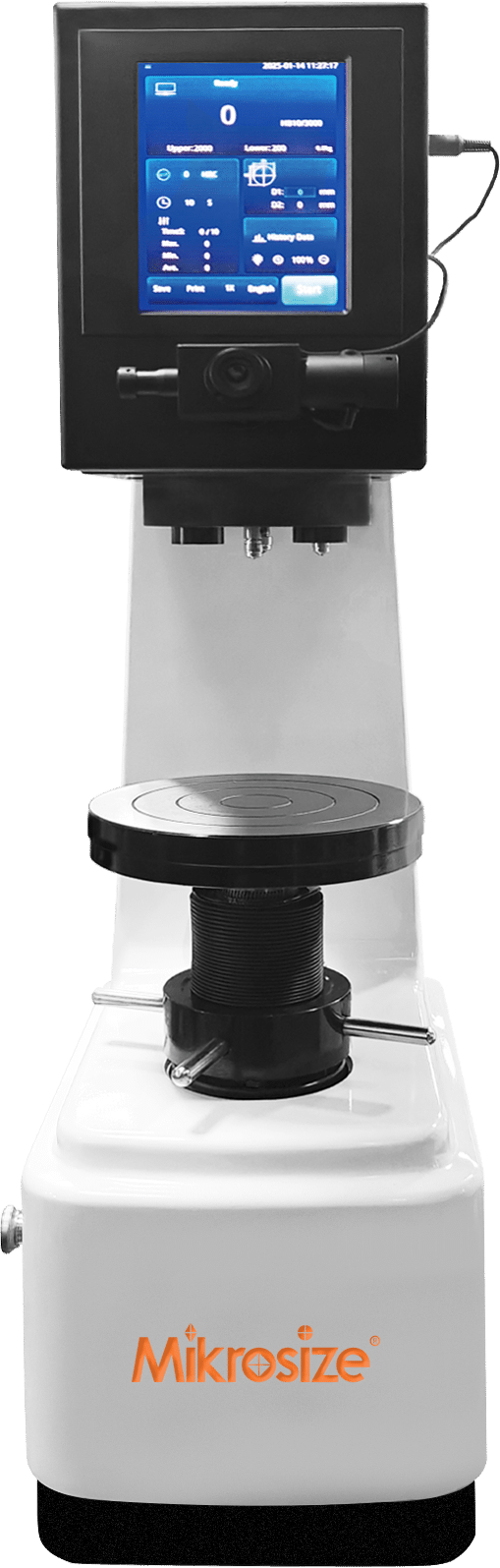
The digital Brinell hardness tester, a cutting-edge product supplied by Mikrosize — a globally recognized professional provider of one-stop measurement and testing solutions — serves as core testing equipment within the precision measuring & testing instrument industry. Mikrosize has long been committed to developing and supplying high-precision testing instruments, and this digital Brinell hardness tester fully demonstrates its technical expertise. It is engineered to meet the growing demand for efficient, accurate, and intelligent hardness measurement in modern industrial and research scenarios. The device integrates advanced electronic technology and precision mechanical design to streamline complex testing workflows while delivering consistent, repeatable measurement results.
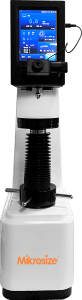
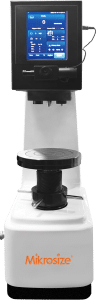
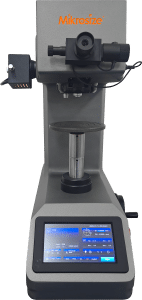
iBrin-3000CL Digital Brinell Hardness Tester iBrin-3000CLD Digital Display Brinell Hardness Tester iBrin-62.5 Low Load Digital Brinell Hardness Tester
Outstanding Advantages
- Automated Control: Adopts an advanced fully automatic closed-loop load sensor control system. It enables full automation of the complete test cycle (including load application, preset dwell time holding, and load release) and delivers precise regulation of every testing stage. Automated operation eliminates human-induced errors stemming from manual handling, boosts testing efficiency, and guarantees excellent repeatability of test results.
- Stable & Stylish: The main unit is manufactured via high-precision casting processes, which improves overall structural rigidity and operational stability. This robust frame effectively suppresses interference from external vibration and ambient fluctuations during testing, securing accurate measurement data. Meanwhile, its sleek, modern exterior design makes it not only a professional testing device but also a tidy fit for any laboratory or workshop space.
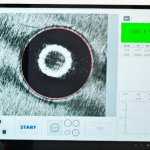
- User-Friendly Interface: Equipped with an 8-inch HD LCD touchscreen, the instrument features an intuitive, easy-to-operate interface. The screen clearly displays core testing parameters (such as test load, dwell time, and hardness reading) and supports one-touch access to frequently used functions. Operators with limited professional expertise can master operation quickly, lowering corporate training costs.
- Precise Unit Conversion: Its built-in high-precision control system enables automatic conversion among all standard hardness scales, including Brinell (HBW), Rockwell (HRC, HRB), Vickers (HV), and Shore (HS) hardness units. This removes the need for manual computation or separate conversion charts, allowing users to directly obtain hardness readings in their required unit per relevant testing standards or application demands.
- Hardness Calibration: Comes with a convenient built-in software calibration function for hardness readings. Minor reading drifts may emerge after long-term operation or under changing ambient conditions; users can complete hardness calibration within a specified tolerance range directly via the touchscreen, without requiring professional service technicians or instrument disassembly. This sustains long-term measurement accuracy of the equipment.
- Efficient Data Management: Fitted with large-capacity internal storage to automatically categorize and store test data. Each data group can hold up to 10 test records (including test time, hardness reading, and test parameters), and the internal database can store more than 1,000 test records in total. Users can easily query, export, or print historical records, enabling full test traceability and statistical analysis of product quality.
- Intelligent Alarm: Allows configuration of hardness upper and lower tolerance limits aligned with product quality specifications. During testing, if the measured hardness reading falls outside the preset range, the instrument will instantly trigger integrated audible and visual alarms, reminding operators to promptly inspect material quality and test procedures. This effectively stops non-conforming workpieces from entering subsequent production processes.
Application in Measuring & Testing Instrument Industry
As essential precision testing equipment, this digital Brinell hardness tester plays a vital role across multiple industries. In metallurgy, it performs hardness testing on cast ingots, rolled sheets, and forgings to verify that material performance complies with process specifications. In machinery manufacturing, it facilitates hardness inspection of critical components including gears, shafts and bearings — a key step to guarantee the service life and operational safety of mechanical equipment. For power and petroleum machinery sectors, it tests pipeline weld joints and pressure vessel base materials to eliminate safety risks caused by insufficient hardness. Additionally, the automotive industry widely applies this tester for hardness measurement of auto parts such as engine blocks and chassis components to ensure stable product quality and reliability.
Conclusion
The digital Brinell hardness tester stands out in the precision measuring & testing equipment market thanks to its core strengths including full automation, high measurement accuracy, simple operation and intelligent data storage. It not only simplifies hardness testing workflows but also greatly improves the precision and efficiency of quality inspection. Backed by Mikrosize’s stable supply chain, rigorous in-house quality control and professional after-sales support, this instrument remains an indispensable core device for reliable hardness measurement across all industrial sectors. It provides solid support for enterprises to boost product quality, cut manufacturing costs and strengthen market competitiveness.
-150x150.jpg)